Exactly eleven minutes after our divorce was finalized, my former husband kissed his lover and declared that I was worthless without him.
By the following sunrise, the man whose business success had depended on my money for twelve years would discover the enormous cost of that insult.
Outside the courthouse, Grant Holloway slipped an arm around Brielle Sutton, his twenty-eight-year-old marketing director.
She deliberately lifted her left hand, displaying a diamond ring worth almost eighty thousand dollars.
“Beautiful, isn’t it?” she asked. “Grant says I deserve something special.”
I knew exactly where that ring had come from.
Three months earlier, its purchase had appeared in a corporate expense report, concealed under a supposed client acquisition fee.
Grant chuckled.
“Don’t look so miserable, Marian. You got what you deserved.”
Under our divorce settlement, I’d retained the original family house, a relatively small financial payment, and several investment accounts Grant believed had little value.
He’d walked away with the luxurious penthouse, costly automobiles, and Holloway Development, his real estate business supposedly worth $240 million.
Or at least, he thought he had.
“Without me, you’re nothing,” he sneered.
Brielle laughed.
“Maybe you can finally get a real job.”
I calmly put on my sunglasses.
“Congratulations,” I said. “Enjoy everything you’ve earned.”
Then I headed toward the vehicle waiting for me.
Grant shouted after me.
“Don’t come begging when the money runs out!”
My lawyer, Dana Whitfield, was already seated inside the car.
She passed me a leather document folder.
“The divorce decree has been entered. Everything is official.”
“And the financing agreement?”
“Effective immediately. The marital dissolution provision has been triggered.”
I opened the folder and studied Grant’s signature on a contract he’d signed twelve years before.
At that time, he was an ambitious young property developer struggling with an unsuccessful construction venture and almost two million dollars in debt.
My grandfather, an accomplished private investor, had arranged funding for him through an investment firm named Larkspur Capital.
What Grant never discovered was that Larkspur was owned by a trust my grandfather had created for my benefit.
During the following years, Larkspur had poured $68 million into his company.
It had backed construction loans, supplied capital for property purchases, and repeatedly saved his business when his irresponsible choices brought it dangerously close to bankruptcy.
Buried in the agreement was an unusual contractual condition.
If our marriage dissolved, Larkspur had the right to end its loan guarantees immediately, halt further financing, and, after an uncured default, enforce its contractual right to acquire shares pledged as security.
Grant had brushed off the condition as irrelevant legal jargon.
He’d never taken the trouble to read the contract a second time.
Dana observed my expression closely.
“Once the notices go out, there’s no turning back.”
I glanced through the car window.
Grant was opening the door of his Ferrari for Brielle.
“Send them.”
As our vehicle began moving away, my phone buzzed.
Grant had sent me a picture of Brielle proudly displaying her diamond ring.
Below the photograph was a message.
Thanks for finally getting out of my way.
Home Stories Minutes After Our Divorce Became Official, My Ex-Husband Kissed His Mistress Outside the Courthouse. Then He Turned to Me With a Smirk. “Without me, you’re nothing.” His Mistress Laughed, Showing Off a Diamond Ring Purchased With My Money. I Only Smiled and Left. Neither Realized That Signing the Divorce Papers Had Triggered a Hidden Clause. By Morning, He Would Learn Who Had Really Financed His Entire Empire…
Part 2 of 3
I couldn’t help smiling.
He had absolutely no idea what was about to happen…
Part 2
That night, Grant threw a party in his Manhattan penthouse. There was champagne, a rented string quartet, and a hundred guests who had never once asked how his company stayed afloat. Brielle livestreamed nearly all of it, turning her phone toward the skyline, the ice sculptures, and the diamond on her finger.
“To new beginnings!” she announced, lifting her glass. “And to leaving dead weight behind!”
The guests cheered. Grant kissed her for the cameras.
Forty blocks away, I sat in my grandfather’s old study with Dana and a forensic accountant named Owen Kessler. The room still smelled of pipe tobacco and aged leather, and the walls were lined with the ledgers he had kept by hand until the day he died. Owen had spread printouts across the desk where my grandfather once taught me to read a balance sheet.
“It’s worse than we thought,” Owen said. “Over the past four years, Grant diverted roughly $9.4 million out of company accounts.”
He walked me through it line by line. A Caribbean villa rental. Jewelry. Payments to shell companies with names like Granite Ridge Consulting and Bluebird Advisory, neither of which had ever consulted anyone. A condo in Brooklyn purchased for Brielle’s birthday.
“Can we prove he authorized all of it?” Dana asked.
Owen opened a second folder. “Every transfer carries his approval. He even instructed his finance director to rewrite the expense descriptions so the records would survive an audit.”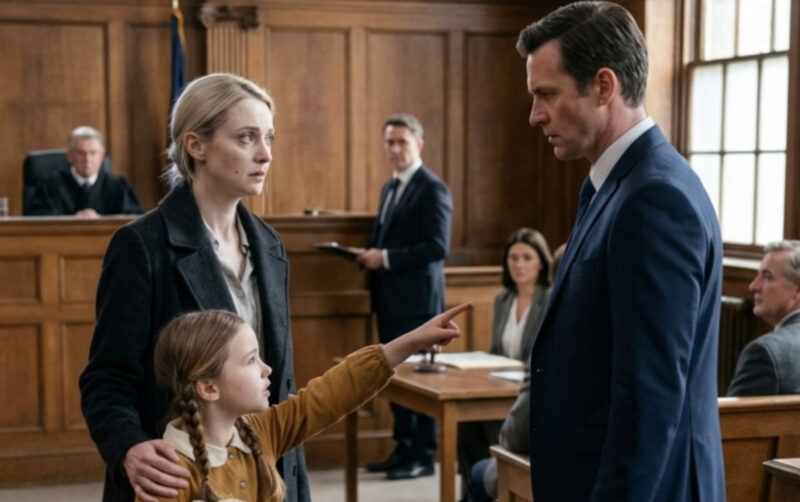
I looked at the numbers and thought of my grandfather. He had wanted to give a struggling young man a chance. Instead, his generosity had become Grant’s private spending account.
“Prepare everything,” I said. “The independent directors should have it in the morning.”
“They will,” Dana said. “And the lender notices?”
“Tonight.”
At midnight, while Brielle’s guests were still toasting, Larkspur’s managing director sent the formal notices. The guarantees were suspended under Section Seventeen. By six the next morning, two construction lenders had frozen their scheduled advances, and a third had demanded replacement guarantees within ten business days.
Grant called me at 7:15.
I let it ring four times before answering. “Good morning, Grant.”
“Did you contact Larkspur?” His voice was rough. He hadn’t slept, or he hadn’t slept well. “They’re refusing to back our financing. Marian, what did you do?”
I stirred my coffee. “That sounds serious.”
“Don’t play games with me. I have a seventy-million-dollar development closing this week!”
“Then you should talk to your financial advisers.”
“You don’t understand how any of this works,” he snapped. “Stay out of my business.”
“I’ll keep that in mind.”
I hung up. Twenty minutes later, a text from Brielle lit up my screen.
Whatever you’re trying to do, it won’t work. Grant’s company is worth hundreds of millions. You’re just a bitter ex-wife.
I forwarded it to Dana without a word.
At nine, Grant stormed into Larkspur’s offices demanding to speak to the owner. The managing director, a calm woman named Priscilla Ortiz, explained politely that the controlling beneficiary would be unavailable until Friday’s emergency board session. Grant called Dana next, shouting loudly enough that she held the phone away from her ear.
“Who owns Larkspur?”
“You’ll have that information at the meeting,” she said.
“I’ll sue every one of you!”
“Before you make threats, Mr. Holloway, I’d suggest rereading Section Seventeen of the agreement you signed.”
He hung up on her.
That afternoon, Owen found something that made the whole picture clearer. Weeks before the divorce was final, someone had drafted paperwork to move several company-owned properties into a new LLC. The sole manager was Brielle Sutton. The transfers hadn’t been filed yet, but the documents were ready, and they were dated while Grant and I were still negotiating the settlement.
“He was hiding assets,” Owen said. “While acting like the injured party in the divorce, he was preparing to move property beyond everyone’s reach.”
“And Brielle?”
He turned his laptop toward me. “She wasn’t just a bystander.”
Their emails were careless, the way arrogant people’s emails often are. They discussed how to keep auditors from asking questions, how long they could delay certain disclosures, and how much of the “inconvenient paperwork” could wait until after the settlement. One line made Dana close her eyes.
Once Marian signs, she’ll never know what we took.
I read it three times.
Twelve years I had spent quietly rescuing this man. I had signed documents, smoothed over crises, and let him believe his talent alone had carried him. And all along he had mistaken my loyalty for ignorance.
“Are you ready for Friday?” Dana asked.
I looked up at my grandfather’s portrait above the fireplace, the faint smile he always wore when he knew something others didn’t.
“More than ready.”
On Friday morning, Grant strode into Holloway Development’s boardroom in a navy suit, wearing his usual contempt like cologne. Brielle followed, clutching a designer handbag and scrolling through her phone.
He stopped in the doorway when he saw me seated at the head of the table.
Home Stories Minutes After Our Divorce Became Official, My Ex-Husband Kissed His Mistress Outside the Courthouse. Then He Turned to Me With a Smirk. “Without me, you’re nothing.” His Mistress Laughed, Showing Off a Diamond Ring Purchased With My Money. I Only Smiled and Left. Neither Realized That Signing the Divorce Papers Had Triggered a Hidden Clause. By Morning, He Would Learn Who Had Really Financed His Entire Empire…
Part 3 of 3
“What the hell are you doing here?”
Dana rose beside me. “Mrs. Holloway is here on behalf of Larkspur Capital.”
Grant barked out a laugh. “Marian? She couldn’t run a lemonade stand.”
Nobody laughed with him. The six independent directors exchanged uneasy glances. They had read the materials Dana had sent the day before, and they understood something Grant didn’t. Whatever had happened in our marriage, they had obligations of their own: to the lenders, to the investors, and to the nearly nine hundred employees whose paychecks depended on this company surviving.
I opened my folder.
“Larkspur has suspended its financing commitments under the agreement. Three lenders have requested replacement guarantees. Your company has substantial obligations coming due within thirty days.”
Grant slammed his palm on the table. “Then get Larkspur’s owner on the phone and fix this!”
“You’re looking at her.”
The room went silent. Even the air-conditioning seemed to hush.
Brielle’s smile faltered first.
“What?” Grant said.
“My grandfather created Larkspur for me. Every dollar that rescued your company over the last twelve years came from a trust in my name.”
Dana slid the trust records across the table. Grant snatched them up, flipping pages with increasing desperation. I watched his eyes move from the signature page to the beneficiary line and back again.
“This isn’t possible,” he muttered.
“Do you remember the agreement you signed when you were nearly two million dollars in debt? The one you called a waste of your time?”
The color left his face.
“You knew,” he whispered. “All this time, you knew.”
“I knew who had financed your business,” I said. “I didn’t know how thoroughly you’d abused it.”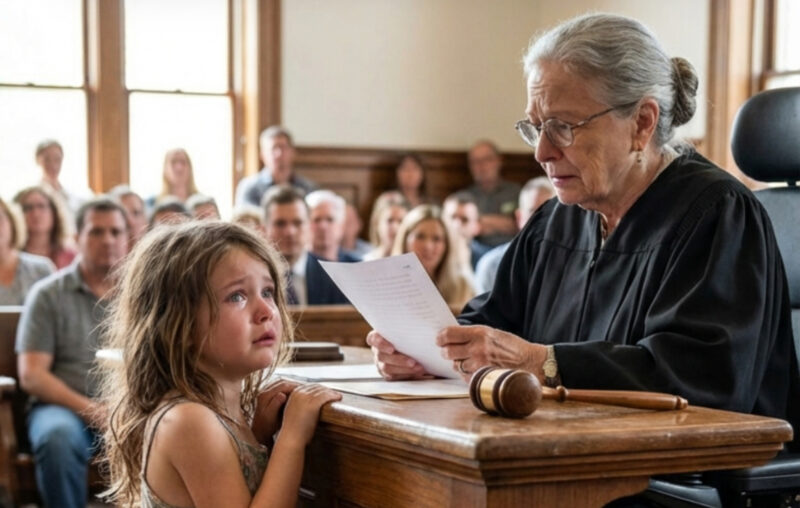
Owen stood and clicked a remote. The wall screen filled with the evidence. The Caribbean villa. The Brooklyn condo. The shell companies. The invented invoices. The ring. Then the emails, one by one, ending with the sentence I had read so many times that I could recite it.
Once Marian signs, she’ll never know what we took.
Brielle shot to her feet. “That was Grant’s idea! I only did what he told me!”
Grant spun on her. “Sit down and shut up!”
“You promised nobody would ever find out!”
One of the directors, a gray-haired man named Walter Pruett, slowly removed his glasses. “Am I understanding correctly that we’ve just heard two admissions?”
Grant jabbed a finger at me. “She set me up! She destroyed our marriage to steal my company!”
I kept my voice even.
“No, Grant. You destroyed our marriage. I’m protecting the company you tried to steal.”
The board voted in under ten minutes. Grant was suspended as CEO, effective immediately, pending an independent investigation. After a brief review of the documents bearing her name, they terminated Brielle’s employment as well. Two security officers appeared at the door, polite and unhurried.
As they escorted him out, Grant stopped beside my chair. His arrogance had burned away, and what was left looked small and frightened.
“Marian, please,” he said quietly. “We can fix this. We were good once.”
I thought of the anniversaries he’d forgotten. The insults he’d tossed over dinner as if they were jokes. The nights I’d sat alone with a cooling meal while he told me he was working late, when he was actually in another woman’s bed.
“You’re right,” I said. “We can fix this.”
Hope flickered across his face.
“Without you.”
The investigation took seven months. Grant failed to cure the documented defaults within the time the agreement allowed, and Larkspur exercised its contractual right to acquire his pledged controlling shares. Everything was done by the book, reviewed by outside counsel, and approved by the court. Dana insisted on it. “We win cleanly,” she told me. “Nobody gets to say you took anything you weren’t owed.”
Federal prosecutors filed charges against both of them. Grant pleaded guilty to wire fraud and money laundering and received a sentence of seven years. Brielle accepted a plea deal that required full restitution and the surrender of the Brooklyn condo. Her diamond ring was sold at auction, and the proceeds went back into the company accounts it had been stolen from.
I attended neither sentencing. Dana told me later that Grant had searched the gallery for me. I wasn’t there.
Eighteen months after that day in the boardroom, Holloway Development was still standing. Walter Pruett and the independent directors had brought in an experienced management team. Not one employee had lost a job. Construction resumed on the stalled projects, and Larkspur restored its financing, this time with transparent oversight and quarterly audits that would have made my grandfather proud.
I renamed the company’s charitable arm after him. It now funds scholarships for first-generation college students and small-business loans for people the banks turn away.
On a cool morning in early spring, I stood on the balcony of the house I’d kept in the divorce, the one Grant had called “the small place.” The sun was just beginning to lift over the maple trees, and the coffee in mmy hands was still hot. Down the hall, on my desk, lay an unopened letter in Grant’s handwriting. It had arrived two weeks earlier, forwarded through his attorney.
I knew I would never read it.
He had told me I was nothing without him. But without him, I had found everything that mattered. My freedom. My dignity. My own name on my own work.
I finished my coffee, watched the light spread across the garden, and went inside to begin the day.