
When Blair loses her mother to cancer, grief isn’t the only thing she has to bear. Behind the silence lies betrayal… and a promise she intends to keep. In a story of quiet anger, slow revenge, and poetic justice, Blair proves that some daughters never forget. And Karma? It just waits.
I always thought I was one of those people who forgave easily. Forgive, but don’t forget. And I truly did.
But then my mother died while my father held another woman’s hand in an overpriced Italian restaurant, and something inside me broke: clean and sharp.
This isn’t just about grief. It’s about betrayal. It’s about the silence that lays itself next to you like a second shadow. And it’s about what you do when you realize that the people you love most might be the ones who hollow you out.

My name is Blair. I’m 25, and until a year ago, my mother, Rachel, was my whole world. She was my moral compass. She was sharp-witted, warm-hearted, and a little too generous with birthday reminders. She encouraged me, and pushed me to come out of my shell.
“Blair, come on, girl,” she’d always say. “When are you going to leave your bubble? Go out. Adopt a cat and learn to love something else… then you’ll learn to love yourself too.”
Turns out, she was right. When little Gem came into my life, I learned to love unconditionally, just as my mother had always planned.
If there is a heaven, I hope my mom gets to teach there. Even cell division felt like a love story with her.
My father Greg, on the other hand, is a different story. I mean, he’s charming in that “Boomer” way that makes weird jokes at funerals. He wore sarcasm like cologne. And he was the type who always needed a room to revolve around him.
When Mom got sick, everything changed. Pancreatic cancer, stage 4. It was fast, so fast, that on some days I thought, if I blinked slower, I might buy her some time.

“It’s okay, honey,” she said with bags under her eyes and dry lips. “I’m fighting this. For you and for me… and even for Dad. So everything will be fine.”
But it wasn’t. Every day was harder than the one before.
Eventually, she was admitted to long-term care in a bright wing of the hospital. That was when I decided to move back home.
“Don’t you dare, Blair,” she said. “I don’t want you changing your whole life for me! And what about little Gem? Doesn’t she need a home too?”
“Gem’s home is wherever I am, Mom,” I argued. “And my home is wherever you need me.”
My mother’s eyes filled with tears, ones that had been on the verge of spilling for days. She nodded slowly.
“Okay. As much as I want to fight this, I just want you here.”
I held my mother’s hand as she lost her hair. I held her body as she started forgetting how to walk properly.
And Dad? Yeah, that was a different story.
“It’s too sterile in there, Blair,” he’d always say. “Hospitals make me uneasy.”

He visited her once a week. Fifteen minutes, at most. Then he’d kiss her on the cheek and mumble something about traffic. I hated him for it. But she always smiled and forgave me.
“Let him deal with it how he needs to,” my mother once whispered, her voice exhausted from morphine. “It can’t be easy to see this, baby. You’re made of stronger stuff… Dad isn’t.”
She still protected him. Even then.
One evening, she said it.
“Have you noticed how strange your dad is around Lisa?” she asked, setting down her bowl of soup.
Lisa was Mom’s colleague. She was a chemistry teacher at the school. Shiny. Blond. She tried to make store-bought muffins look like they were homemade. She was the kind of person who’d try perfumes in stores, then go out and give everyone a headache.
Lisa was… interesting.
I hadn’t noticed anything between my dad and Lisa, but once Mom pointed it out, I couldn’t unsee it.
Suddenly, I became hypersensitive to him. I tried to eavesdrop on his phone calls. At least a dozen times I asked him about his evening plans. I didn’t know what I was doing or why, but if Mom had a suspicion, I needed to know why.
One evening, Dad told me he was going to the gym instead of visiting Mom.
“Sorry, Blair, but my back’s been bothering me. I need to stretch it out. I’ll visit Mom tomorrow. I’m bringing some of those fancy cakes she likes. You should get some sleep, you look exhausted.”
When he left the house, his gym bag was still by the door.
So I followed him. I’m not proud of it, but I’d do it again.
He drove to a place with string lights on the terrace and small candles on the tables. It was a beautiful, romantic scene.
Until I saw Lisa.
She was standing there, her wavy hair falling down her back, wearing a simple red dress and glowing. She smiled as if she hadn’t just sat by my mother’s deathbed a week ago, holding a can of those stupid muffins.
I watched him reach across the table. His hand on hers. The candlelight dancing on his wedding ring.
I felt sick.
But I took photos. Enough of them. My hands shook so badly I thought I might drop the phone. But I got them.
That night, I waited at the kitchen table, sipping coffee to stay awake. I had turned the lights off to surprise my dad. He came in, humming happily as always. I didn’t speak until he flipped the light switch on.
“You were with Lisa,” I simply said.
He froze. Still facing away from me.
“You followed me?” he asked, as if that were the ultimate betrayal.
“She’s Mom’s colleague, Greg.”

He exhaled, like I was being difficult.
“I’m your father, Blair, not your friend. It’s either Dad or nothing.”
I didn’t say anything.
“Look, Mom hasn’t been a wife to me for months. I’m lonely, Blair. I need comfort.”
I wanted to rip his hair out. But I didn’t scream. I wanted to, but I didn’t.
Instead, I left. I drove straight to the hospital and crawled into bed with Mom. I didn’t show her the pictures. I just told her the truth.
Her body trembled as she cried quietly. Like everything else she did, even in her despair, she was graceful.
“Promise me something,” she said after a while.
“Anything, Mom,” I promised.
“Don’t let him get away with it.”
I swore I wouldn’t.

Three months later, my mom stopped fighting. She was gone.
The funeral was simple. Family. Close friends. Lisa was there, dressed in black, dabbing her dry eyes with a tissue like it was a stage direction. She clung to my father’s arm as if she belonged there.
I said nothing. Not then. Grief is a thief, I’d learned. It steals your voice before you can take a breath.
Weeks later, when I was packing up Mom’s things, I found her journal. Inside was a letter addressed to me.
“Honey, if you’re reading this, I’ve left you.
Not willingly. Never willingly. If your father is still with Lisa, know that I forgive you if you do what you need to do to protect yourself. You were always the strongest of us all.
Love, Mom.”
That was it. That was all I needed.
What Dad didn’t know: the house wasn’t entirely his. Mom had left her name on the deed. When she died, her share went to me. Quietly and without much fanfare, I went to a lawyer. Then I waited.
My plan had three steps. Simple as that.
Step 1: Smile. I agreed when Dad told me Lisa “would move in to help him adjust.” I helped carry boxes. I hung Lisa’s navy curtains in the living room because she wanted them there. I played the grieving daughter who just wanted peace and to move on.
Step 2: I played nice. I helped cook Sunday dinner. I went on their shopping trips. I laughed at Lisa’s comments about “how hard grief is, huh?”
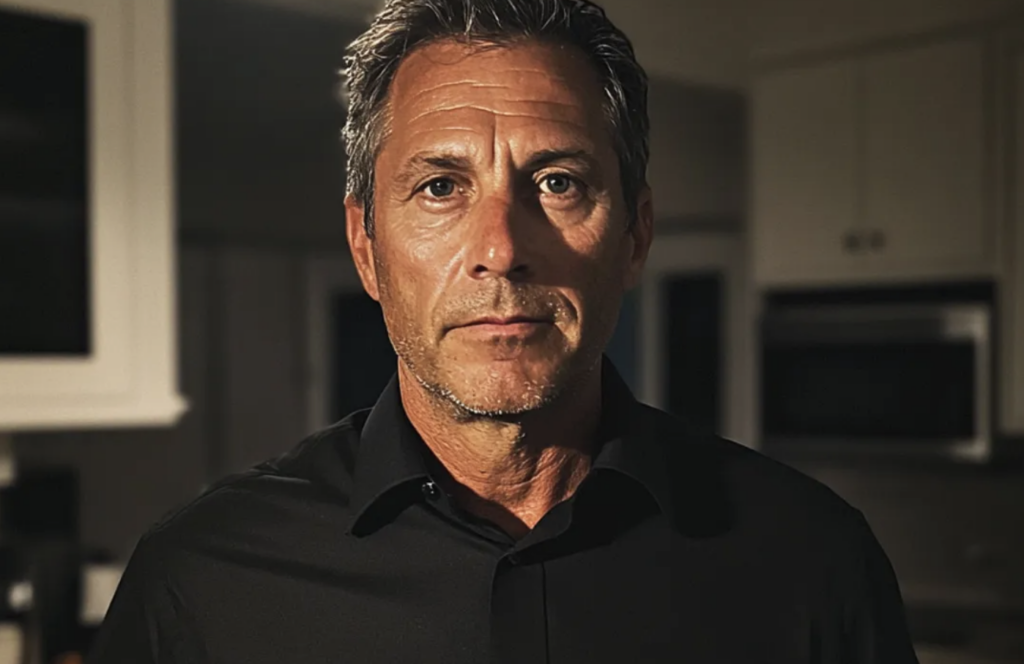
They thought they’d won.
Step 3: Pancake Saturday. I served them the papers with a stack of delicious pancakes I made from Mom’s recipe.
“I’m selling my half of the house,” I said while pouring myself a glass of orange juice.
“You can’t do that, Blair!” he said. “It’s mine anyway.”
“I can. It’s mine. Mom left me everything she had, including her share of the house.”
“We can’t go anywhere…” Lisa blinked.
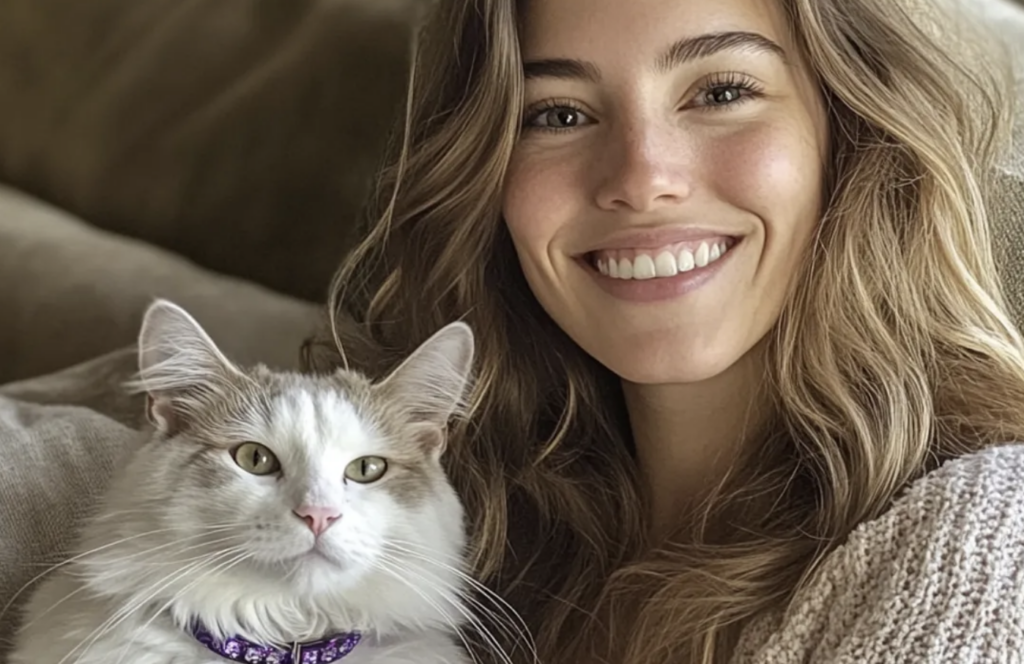
Gem meowed at my feet, as if encouraging me to be strong. For me and my mom.
“That’s not my problem,” I shrugged.
“Blair, I never wanted…” She lowered her voice and tried to be sympathetic.
“You brought muffins to my mom’s wake, Lisa. Old, store-bought cakes. Your eyes were completely dry when you gave your supposedly tear-jerking speech. Please, save your performance.”

My father didn’t even try to argue with me after that. So we sold the house.
An elderly couple bought it. I made sure my father had thirty days to vacate. I left the documents on the kitchen table, just like he’d left Mom’s wedding ring there when she died.
I moved to a new town, taking Gem and Mom’s belongings with me. I thought I was done. I thought it was all over.
But it turned out my dad proposed to Lisa. I got the news one morning by email while I was settling in for work. Apparently, they wanted a small wedding in their new garden. Something intimate and tasteful.

I said yes – and, of course, declined. But I sent a little something in my place.
That morning, my cousin Jenna, the wedding photographer, received an envelope. Inside were the photos I’d taken that night. Dated. With a timestamp.
“These photos were taken while my mother was dying in the hospital. I hope they bring you joy on your special day.”
Jenna read the text aloud before she clicked the first photo.
“Lisa ran. Literally. In high heels,” Jenna told me later. “Uncle Greg just stood there, stunned. At some point, I thought he was going to cry, but then he just sat down and stared at the sky. My mom took care of him after that. I left.”
I regret nothing.
Forgiveness is sacred, my mother always said. But honoring the truth is too. And my mom deserved something much better than him.
Poor Dad, huh? He never understood what he lost.