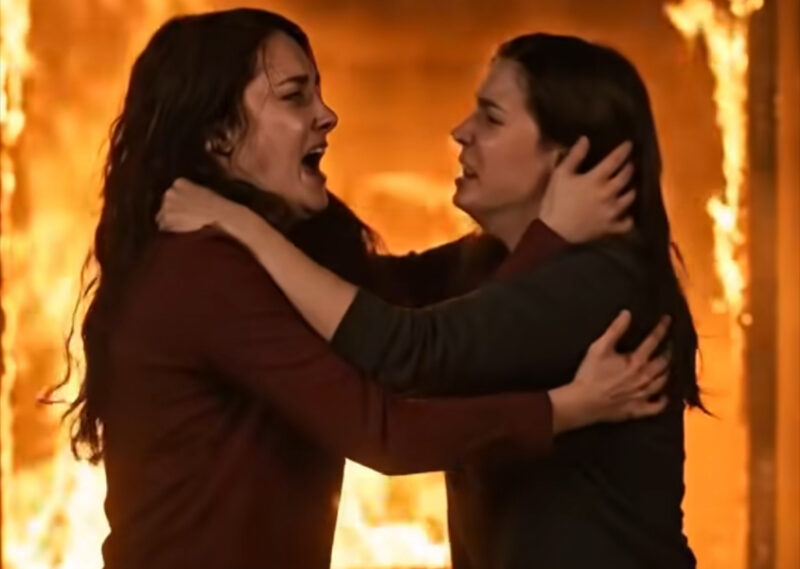
My parents let my sister disable every smoke alarm in our house because she claimed the noise was a form of violence. Then, after a fire nearly took our lives, they tried to stay “neutral” when she had me arrested for saving them. When I finally asked my mom why she could possibly still believe my sister, Zoe, after everything, she just looked at me with weary eyes and said, “You always did hate the whispering. Maybe this was your way out.”

That was seven weeks ago. This morning, she was standing outside my new apartment, clutching Zoe’s real medical records and crying.
My sister required our entire family to whisper in her presence because she claimed that normal-volume voices caused her physical pain. For years, my family lived in a state of constant, strained whispers, unable to speak normally in our own home for fear of causing her suffering. It was a tyranny of silence that almost ended all of our lives.
Zoe had always been sensitive to sound. As children, she’d cover her ears during thunderstorms and cry at birthday parties when people sang “Happy Birthday.” But when she turned fifteen, she read about something called “auditory processing sensitivity” online and diagnosed herself with a severe, undocumented case. She began wearing noise-canceling headphones everywhere and flinching dramatically at the sound of a closing door or a normal conversation. Our parents, desperate to help, took her to specialists who found nothing medically wrong. But Zoe insisted the doctors simply didn’t understand her unique and delicate condition.
She began to train us, to condition us, to modulate our voices around her, claiming our “aggressive volume” was destroying her nervous system. We thought it was just Zoe being theatrical until she started enforcing consequences.
The rules were formalized with a laminated volume chart she taped up in the kitchen. Level One, “Therapeutic Whisper,” was the only acceptable volume for all communication. Anything above that was classified as “Assault Volume.” She would hold a decibel meter during conversations, meticulously documenting every violation. If we spoke at a normal pitch, she’d collapse to the floor, clutching her head and screaming that we were torturing her with sound waves.
“You’re killing me!” she’d wail if my father forgot and cheered for a touchdown at a conversational level.
Our parents, terrified of her reactions and desperate for peace, made us attend “Family Voice Therapy.” The therapist, a woman Zoe had found online, taught us that “vocal violence” was a real and damaging phenomenon and that we had a moral obligation to protect Zoe from our naturally aggressive voices. We all signed contracts, notarized and framed, promising to whisper in her presence. She posted signs throughout the house: WHISPER ZONE: NORMAL VOICES ARE VIOLENCE. Even clearing your throat too loudly would send her into hysterics about our cruelty.
Living in a constant state of whispers warped everything natural about family life. Dad would whisper at the TV during football games, his excitement reduced to breathy, hushed announcements of “touchdown” while the crowd roared from the speakers. My mom once won $5,000 on a scratch-off ticket and whispered, “We won,” with all the joy of someone sharing a death announcement. My boyfriend broke up with me via text because he couldn’t handle the suffocating quiet, saying our whispered conversations felt like sharing a shameful secret, not intimacy.
Every time I had a moment alone with my parents, I’d beg them to take a stand against her rules. But they insisted the most important thing was “keeping the peace.”
“I don’t even notice the whispering anymore,” Mom would say. “You’ll get used to it, too.”
But I never did. How do you get used to whispering “Happy Birthday” like a funeral hymn while your sister monitors you with a decibel meter? How do you get used to your own grandmother being rushed to the emergency room in an ambulance because her normal-voiced “Hello, sweetie!” sent Zoe into what she claimed was a stress-induced seizure? Zoe even convinced the paramedics to turn off their sirens and communicate with her in whispers.
The absurdity of it all wasn’t just confined to our home. School became my only escape where I could speak at a normal volume, but even there, Zoe managed to get the administration to create a “quiet zone” around her. Students had to whisper in the hallways when she passed. Some teachers restructured their classes, using written instructions instead of verbal ones to accommodate her. She carried laminated cards explaining her condition and made anyone who might need to speak near her sign liability waivers. The whole world was bending to her will.
The situation was ridiculous, but it wasn’t truly dangerous until the night I woke up at 2 a.m. to the acrid smell of smoke. Zoe had left a decorative candle burning in the living room, and now the curtains were engulfed in flames.
My first instinct was to scream, to wake everyone immediately. But years of conditioning had trained me to whisper, even in a crisis. I stood frozen in the hallway, the smoke beginning to fill the air, and my first warning came out as a strangled, pathetic whisper: “Fire! There’s a fire!”
I ran to my parents’ room, whispering urgently at their closed door. Nothing. I pushed inside and whispered directly in my mom’s ear. She just mumbled and rolled over. The smoke was getting thicker, stinging my eyes. I shook my dad, whispering as loudly as I could, “Fire! Dad, wake up!” He couldn’t hear me over the white noise machine Zoe required in every room of the house.
My throat burned from the smoke and the strain of forced whispering. I ran to Zoe’s room, knowing that any volume above a whisper would cause its own kind of chaos. But I had no choice. The smoke alarms hadn’t gone off. Of course they hadn’t. Zoe had made us disable them months ago. “The sound is violence,” she had insisted.
I stood at her door, paralyzed for a split second between years of psychological training and the immediate, primal need to save my family. Finally, with a raw, tearing sensation in my throat, I screamed. “FIRE!”
The sound was explosive in the silent house. Zoe erupted from her room, but she wasn’t fleeing the flames. She was attacking me, clawing at my face, screaming that I had assaulted her with my voice. While thick, black smoke poured through the hallway, I shoved past her and ran back to my parents, screaming at the top of my lungs for them to wake up. As they finally stirred, groggy and confused, Zoe fell to the floor in what looked like convulsions, completely ignoring the fire that was now licking at the doorway.
We lost half the house that night. The fire marshal later told me that if we’d stayed inside for two more minutes, we would have all lost our lives. Instead of being grateful, however, Zoe filed assault charges against me.
She told the fire marshal that I had started the fire myself, a desperate, elaborate excuse to finally scream at her without consequence.
“She’s been looking for a way to assault me with her voice for years,” Zoe explained to the investigators, her voice a perfect, trembling whisper. “So she lit the fire and waited until it spread to have her excuse.”
The marshal found the disabled smoke alarms deeply suspicious, even though I told them it was Zoe who had insisted they be turned off. Zoe, ever prepared, produced her recordings of every “whisper violation” I had committed over the years, painting a picture of a sister who hated the restrictions and was simmering with vocal aggression.
“She knew fire was the only excuse that might justify that kind of vocal violence,” Zoe explained calmly. “So she created one.”
My parents sat silent as the fire marshal questioned them. My mother, her face pale and drawn, looked like she might actually believe Zoe’s monstrous story.
“She tried to kill us all just so she could scream,” Zoe whispered, and my mom hesitated, her gaze shifting away from mine.
I opened my mouth to defend myself, to scream the truth, but no sound came out. The smoke, the screaming, and years of forced whispering had finally stolen my voice completely. The next thing I knew, I was in handcuffs, being arrested for arson.
The police station smelled like burnt coffee and disinfectant. I sat in the interrogation room, my throat raw and useless, unable to make any sound at all. The detective across from me tapped his pen against the metal table, waiting for answers I couldn’t give. He finally slid a notepad and pen across to me.
I wrote frantically, my hand cramping as I tried to capture years of bizarre manipulation in a few desperate paragraphs. I explained about Zoe’s self-diagnosed condition, the whisper rules, the volume charts, the disabled smoke alarms. The detective read my notes with raised eyebrows, occasionally glancing up at me as if I were the one with serious mental health issues.
After three hours of this silent, written interrogation, they released me on my own recognizance. The charges weren’t dropped, just pending further investigation. My parents waited in the lobby, my mom clutching my dad’s arm. Neither of them looked at me as we walked to the car.
The drive home was silent, but it wasn’t the enforced, whisper-filled silence I had grown used to. This was the heavy, suffocating quiet of accusation and doubt. We pulled up to our half-burnt house. Yellow caution tape still stretched across the charred section. Zoe’s car sat pristine in the driveway.
Inside, she had already rearranged the undamaged part of the living room. New, larger “Whisper Zone” signs covered every wall. A stack of papers sat on the coffee table: printouts from online forums about “acoustic assault survivors” and “voice violence PTSD.” She had been busy building her case.
Zoe emerged from the kitchen wearing her noise-canceling headphones, carrying her decibel meter like a weapon. She pointed it at me, then at my parents, monitoring even the sound of our breathing. My mom immediately dropped her voice to a whisper. My dad cleared his throat softly, carefully.
I grabbed a notepad from the counter and wrote in big, angry letters: “SHE LEFT THE CANDLE BURNING. SHE DISABLED THE ALARMS. SHE IS LYING.”
Zoe read over my shoulder and laughed, a harsh, grating sound that seemed to completely contradict her supposed sensitivity. She began whispering to our parents about trauma responses and how perpetrators of crimes often project their guilt onto their victims. She had found a new online therapist, she announced. One who specialized in “acoustic assault recovery.”
That night, I lay in my smoke-damaged room, trying to force any sound from my throat. Nothing came, not even a whisper. The irony was suffocating. Zoe had wanted us all silent. And now, I truly was. Through the thin walls, I could hear her on the phone, her voice suspiciously normal as she talked to someone about “documenting everything” and “building an airtight case.”
The next morning, I woke to find my laptop and my phone missing. Zoe stood in my doorway with my mom, explaining in theatrical whispers that the fire marshal needed to examine all of our electronics for evidence of my premeditated plan. She had “helpfully” gathered them for the investigation. My mom just nodded along, still completely under Zoe’s spell.
I spent the day at the public library, using their computers to begin my own investigation. Zoe’s online activity wasn’t hard to trace. She had been posting in forums for months, complaining about her “abusive” sister who refused to respect her medical needs. The dates of her posts lined up perfectly. Every single one came immediately after an instance where I had challenged the whisper rules or begged our parents for a return to normalcy.
One post from three weeks before the fire sent a chill down my spine: Sometimes I think something dramatic needs to happen for people to finally understand how serious acoustic violence is. Maybe if there were real, undeniable consequences…
I printed everything, my hands shaking. The librarian glanced at me with concern as I gathered the pages. I wanted to explain, to scream the truth, but my voice remained trapped in my damaged throat.
Back home, I found Zoe had installed new locks on her bedroom door and on my parents’ door. “For safety,” she explained to my dad in a breathy whisper, “while the investigation is ongoing.” She had given them the only keys. I was effectively locked out of two-thirds of my own home.
That evening, our neighbor, Mrs. Quinn, stopped by with a casserole. She had always been kind to us. Zoe intercepted her at the door, whispering a dramatic tale about the trauma of the fire and how I had “snapped” under the pressure of her medical needs. Mrs. Quinn glanced past Zoe to where I stood in the hallway, her expression a mixture of pity and confusion. I held up my notepad, desperate to communicate, but Zoe gently closed the door, explaining that I was having “episodes” and it wasn’t safe for visitors.
I retreated to my room and found more of my belongings missing: my journal, years of photographs, even my high school yearbook. Zoe was systematically erasing any evidence of who I was before her narrative took complete hold. On my pillow lay a new, freshly printed document: a “Family Safety Contract” requiring me to stay ten feet away from all family members at all times “for their protection.”
The house felt like a prison. I couldn’t speak, couldn’t access my parents, couldn’t prove my innocence. Every attempt I made to communicate was filtered through Zoe’s manipulative interpretation. She’d whisper to Mom about my “aggressive body language” or tell Dad my written notes were “manipulative tactics.”
On the third day, I discovered the full extent of Zoe’s plan. While she was in her room, I snuck into the kitchen and found her day planner. She had scheduled appointments with three different lawyers, all specializing in victim advocacy. Notes in the margins detailed her strategy: criminal charges for the fire, a civil suit for “years of acoustic assault,” and a restraining order to have me removed from the house permanently. She was going to win. Without my voice, without evidence, without even my parents’ trust, I had no defense against her carefully constructed narrative. The girl who had made us all whisper was about to silence me forever.
That night, I made a decision. If I couldn’t speak the truth, I would have to find another way to expose it. I started with the one thing Zoe couldn’t control: the physical evidence from the fire itself. The fire marshal’s report would show where the fire started, and candle wax didn’t lie.
I snuck out after midnight and walked the three blocks to the fire station. The night dispatcher looked surprised when I handed him my written request to speak with the fire marshal, but surprisingly, Marshal Stewart agreed to meet me the next morning. However, when I returned home, Zoe was waiting on the porch, her decibel meter trained on my footsteps. She’d installed motion sensors. As I approached, she began documenting my “threatening approach” on her phone, whispering a narration about how unsafe she felt. The game had shifted. She knew I was fighting back.
My parents locked me out of the house that night. I spent the night in my car, cold and defeated, but the meeting with Marshal Stewart the next morning was a small victory. He confirmed the fire’s origin was the living room, exactly where Zoe always kept her meditation candles. Wax residue patterns indicated a candle had been burning for hours before tipping over. I showed him the forum posts I’d printed. He made copies, promising to add them to the file, but he warned me that online posts weren’t proof of criminal intent.
Leaving the station, I felt the weight of Zoe’s strategy. She had turned our entire family history into a weapon against me. I returned to find my car surrounded by caution tape, a note from Zoe claiming it was illegally parked. The library became my headquarters. I researched psychological aphonia—voice loss due to trauma—and the irony was not lost on me.
That’s when I remembered Dr. Theodora Reeves, the first specialist my parents had taken Zoe to see years ago. Dr. Reeves had found nothing wrong with Zoe’s hearing and had recommended a psychiatric evaluation instead. Zoe had convinced my parents she was unqualified.
Dr. Reeves agreed to see me. She remembered our family immediately. I wrote out the entire story while she read Zoe’s forum posts. She pulled out Zoe’s old file, showing me her original assessment: not only was Zoe’s hearing perfect, but she’d shown signs of “selective sound sensitivity,” only reacting dramatically when others were watching. Dr. Reeves couldn’t diagnose her now, but she offered to write a letter documenting her original findings and referred me to a colleague, Dr. Marcus Webb, who specialized in trauma-induced voice loss.
Leaving her office, I felt a spark of hope. But in the parking lot, the police were waiting by my car, its windows smashed. Zoe had reported it as abandoned. This was a message.
Dr. Webb confirmed my diagnosis of psychological aphonia. Years of forced whispering combined with the trauma had caused a complete vocal shutdown. He started me on exercises, teaching me to hum and gradually work towards sounds. Progress would be slow, he warned, but he documented my condition, providing medical evidence that my voice loss was real.
A text from an unknown number arrived: a photo of my childhood diary, open to a page where I’d complained about Zoe being too loud at a party. The message below read: Evidence of long-term hostility. Thanks for keeping records. She had been collecting “evidence” for years. This wasn’t a reaction; it was a campaign.
My world had shrunk to my car and the kindness of strangers. Mrs. Quinn found me outside a bank—my account now frozen by Zoe—and pressed cash and a granola bar into my hand. Her belief in me was a lifeline. That money led me to Dr. Sarah Winters, the “therapist” Zoe had found online. She was a life coach with an online certificate who admitted Zoe had paid her to validate her self-diagnosis. She willingly wrote a statement confessing the arrangement.
Each piece of evidence chipped away at Zoe’s narrative. But every step forward was met with a new attack. She put up “dangerous person” flyers with my face all over town. Each police encounter she orchestrated, each report filed, added to her story of my instability.
The breakthrough came from an unexpected place. A young woman named Theo, one of Zoe’s online followers, reached out. She had implemented whisper rules in her own home but seeing Zoe’s escalation against me had opened her eyes. She provided screenshots of Zoe’s private conversations, including one from weeks before the fire where Zoe discussed needing a “dramatic event” to solidify her victim status. Fire had won for its “visual drama.”
This was the proof I needed. Premeditation. Conspiracy. My voice, rough and raspy, began to return, fueled by righteous anger.
Marshal Stewart’s investigation was also closing in. Security footage showed Zoe purchasing the exact candle that started the fire, along with accelerant-adjacent materials, hours before the blaze. He informed me the arson charges against me were being dropped. I was no longer a suspect, but a witness.
The news sent Zoe into a spiral. She doubled down, launching a website—The Silenced Truth: My Sister Tried to Kill Me—and live-streaming from a motel room. She claimed a vast conspiracy, showed freshly self-inflicted scars, and pleaded for donations. But she made a mistake. My lawyer, Theodore Blackwood, whom Dr. Reeves had connected me with, proved I was in his office an hour away during one of her staged “stalking” incidents at the library.
Her online cult began to fracture as inconsistencies mounted.
The final confrontation was not in a courtroom, but in that motel room, broadcast live to the world. My mother, armed with Zoe’s real medical records from Dr. Reeves, walked into the middle of Zoe’s live stream. She didn’t whisper. She didn’t argue. She simply sat on the bed while Zoe performed her most dramatic seizure yet. When the performance ended and Mom hadn’t reacted, Zoe knew she had lost. Mom then held up the medical records to the camera, showing a history of perfect health. The chat log exploded. The narrative collapsed in real time.
The police entered moments later, and the stream cut off.
Zoe was arrested, charged with fraud, false reporting, and reckless endangerment. My parents finally began real therapy to understand the years of enablement. And I, with my voice scarred but strong, began to heal.
Theodore and I started an online support network for families dealing with similar manipulations. Stories poured in from others who had been silenced by these tactics. My voice, once stolen, now became a tool for them.
At the preliminary hearing, I testified. My voice was clear and steady as I recounted the years of whispered tyranny. Zoe watched, a flicker of genuine surprise on her face. She had believed her own lies about my weakness, never imagining that the pressure she applied would forge something unbreakable.
The case was bound for trial, but the battle was already won. Outside the courthouse, my parents stood waiting. We were not ready for reconciliation, but for the first time, we were standing on the common ground of truth. My life ahead would be lived at a normal volume. The girl who made us whisper had, in the end, given me a voice louder and more powerful than I ever could have imagined.