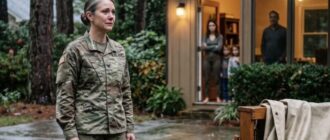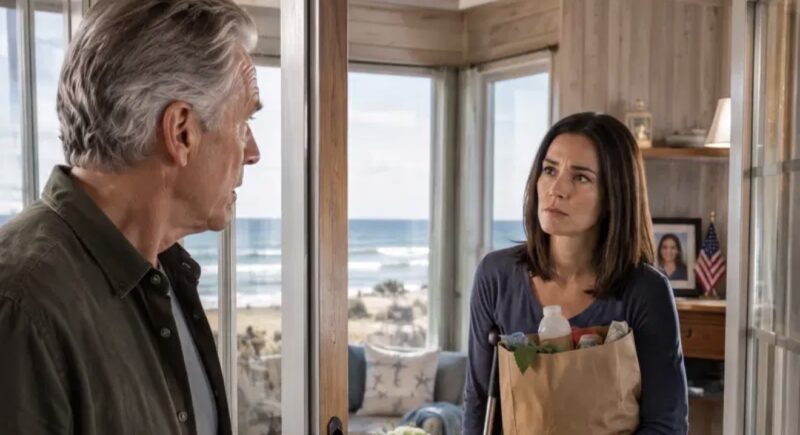
Bradley chuckled when the attorney slid the cabin keys across the desk, and in that instant I realized my son no longer looked at me as his father.
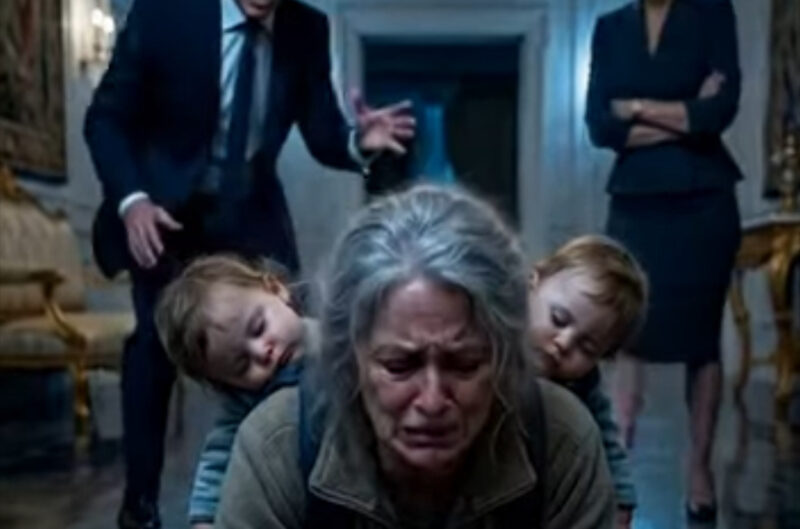
Not because he seemed angry. Anger would have been easier to face. Anger still has warmth, and warmth means something is still alive beneath it. Bradley looked entertained. He lounged in the leather chair beside me in Mr. Thompson’s office, one ankle resting over his knee, his expensive watch catching the afternoon sun, flipping through the final pages of his mother’s will as though he were reading a dinner menu. When he reached the section listing the properties, a smile spread across his face unlike any I had ever seen when he was a boy.
“A beach cabin,” he said, nearly laughing. “Dad gets some old shack on the coast, and I get the villa in Italy.”
Mr. Thompson, who had represented our family for fifteen years, cleared his throat. “Your mother left very specific instructions.”
“Clearly.” Bradley turned toward me, satisfaction shining in his eyes. “Well, that’s just perfect. Even now, Mom knew who deserved what.”
Silence settled over the room.
I had barely spoken since the reading began, my hands folded neatly in my lap, my black suit suddenly feeling too tight across the shoulders because grief makes even familiar clothes feel unfamiliar. Helen had been gone for eight days. The house still carried the scent of her face cream and the lavender sachets she tucked into every drawer. Her robe still hung behind our bedroom door. I still hadn’t figured out how to sleep on my side of the bed without listening for her breathing.
And my son was smiling over property.
Mr. Thompson glanced back at the file. “The coastal property is fully paid off, Eugene. No mortgage. No outstanding lien. The deed transfers directly to you.”
Bradley let out a short laugh. “Great. Dad can retire with the seagulls.”
I stayed silent.
For thirty-two years I solved problems built on pressure and weight. I worked as a construction engineer, the man contractors called when expensive structures refused to cooperate. I studied collapsing bridges, shifting foundations, worn steel, storm damage. I trusted numbers. Load distribution. Blueprints. If you understood where pressure traveled, you could understand why something stood or why it failed.
But there was no equation for the weight of your only child looking at you like discarded material.
Mr. Thompson slid a small envelope across the desk. Inside were two old keys, one brass, the other darkened with age.
“The address is 127 Driftwood Lane, Clearwater Beach,” he said. “It has been unoccupied for some time, as far as I understand.”
“As far as you understand?” I asked.
He hesitated. “Helen was private about that property.”
That was putting it mildly.
I had been married to Helen Miller for thirty years, yet until that afternoon I had never known she owned a cabin by the coast.
Bradley tucked his copy of the papers into a leather portfolio and rose. His tailored suit fit him perfectly, just as everything in his life always had, because someone else had always covered the cost before he ever noticed it. “This has been fun,” he said, already heading for the door. “But I have a flight to arrange. The villa needs appraising.”
“Bradley,” Mr. Thompson said quietly.
My son paused with one hand on the doorframe. “You should probably pack, Dad.”
I looked up.
He smiled again. “I’m putting the house on the market next week.”
For a second I thought grief had distorted what I heard. “This is my home too.”
“Not according to the will.” His voice remained light, almost cheerful. “Mom left the house and everything else that matters to me. You’ve got your beach cabin.”
“Your mother would not want you to force me out.”
“My mother made her wishes very clear.” He glanced at the envelope in my hand. “You have forty-eight hours.”
The door shut behind him.
Mr. Thompson remained quiet for a moment. He removed his glasses, rubbed the bridge of his nose, and suddenly looked ten years older.
“Eugene,” he said, “there may be more to Helen’s decisions than it appears.”
“What does that mean?”
“It means she asked me to carry out the will exactly as written. She didn’t explain everything.”
“That sounds like Helen.”
He leaned toward me. “Go to the cabin before you decide what you think she did.”
I looked down at the keys.
They rested in my palm like two tiny pieces of a life I had never been allowed to see.
That evening I sat in the living room of the house I had called home for thirty years while movers carried away the furniture my wife had picked and my son had already claimed. The grandfather clock, the china cabinet, the walnut sideboard from Helen’s aunt, the cream sofa we bought after Bradley left for college because Helen finally wanted something “grown-up.” Everything had already been labeled, wrapped, or boxed. Bradley had arranged it all before the funeral flowers had even finished fading.
I grabbed our wedding photograph from the mantel before one of the movers packed it away.
Helen wore a satin dress she had bought secondhand and altered herself. I stood beside her in a rented tuxedo, smiling like the luckiest fool in Ohio. We were twenty-five and twenty-eight, sunburned from our honeymoon at Lake Michigan, broke enough to count every restaurant bill, and happier than we knew how to protect.
When had that woman become someone who secretly owned a cabin, left our son a villa, and handed me nothing but keys to peeling paint and salt air?
Or had I become the stranger first?
I didn’t know.
At sunrise I loaded my pickup with the things that clearly belonged to me. My tools. My clothes. Three boxes of books Helen never cared about. My drafting table because Bradley had called it “too ugly to stage around.” A metal lockbox full of work records. The wedding photo. By noon I sat in the driveway with the engine idling, staring at the front window where Helen used to stand with her coffee while I mowed the lawn.
Bradley stood on the porch scrolling through his phone.
He never looked up.
The drive to Clearwater Beach took a little over two hours. The farther south I traveled, the softer the landscape became. Strip malls gave way to causeways, blue water, bait shops, seafood shacks, stucco homes, palm trees bending over parking lots, and tourists in rental cars driving as if the ocean itself had confused them. I kept the windows cracked, letting the salty breeze fill the truck.
Driftwood Lane wasn’t the kind of street people stumbled onto. It was narrow, sandy, and half hidden beneath sea oats. Some homes had been rebuilt into bright vacation rentals with glass balconies and outdoor showers. Others looked like they had been waiting decades for someone to decide their fate.
Number 127 belonged to the second group.
I parked where a driveway had probably existed once. Sand had reclaimed most of it. Weeds pushed through broken shells. The cabin sat behind a leaning fence, its faded blue paint curling away, porch steps sagging, roofline warped by years of weather. Two front windows were boarded shut. A rusted mailbox hung open like a weary mouth.
Bradley’s words echoed in my mind.
A shack.
For a moment I stayed behind the wheel, feeling embarrassed. Helen had left me this. A forgotten cabin on a sandy road while our son inherited the house, the furniture, and a villa overseas that somehow became the family prize despite the fact I had never liked it.
But Helen had never been careless.
She could be distant. She could keep secrets. She could wound people with silence more accurately than others could with shouting. But she was never careless.
I took the keys from my pocket and stepped out.
The brass key fit the lock.
It turned easily.
Too easily.
For a place that was supposedly abandoned, the door opened as if it had been waiting for me.
I stepped inside and froze.
The smell wasn’t mildew. Not decay. Not damp wood surrendering to time.
Lavender.
Soft but unmistakable.
The front room was modest, with worn hardwood floors and a faded couch beneath the window. But the floors had been swept. A blue throw was folded neatly over one arm of the couch. Fresh yellow and white flowers sat in a mason jar on the coffee table, their stems freshly trimmed. A stack of mail rested beside a pair of reading glasses. Sunlight slipped through a gap in the curtains and stretched across a braided rug without a trace of dust.
Someone lived here.
I slowly set down my toolbox.
In the kitchen, two plates rested in the drying rack. Two mugs. Silverware neatly arranged on a dish towel. A refrigerator hummed quietly in the corner. When I opened it, I found milk, soup in a plastic container, eggs, half a lemon, and several prescription bottles lined up on the top shelf.
The labels all read Carol Martinez.
The address was 127 Driftwood Lane.
I closed the refrigerator and stood there with one hand on the handle, trying to force the facts together. Helen had left me a cabin. The cabin was occupied. Someone named Carol Martinez received mail here. Mixed into the stack were Helen’s own letters, including an envelope from an oncology clinic dated two months before she died.
My wife had been coming here.
Not once.
Not occasionally.
Regularly.
I picked up the clinic envelope and stared at the return address. Clearwater Medical Center. Oncology Services. Appointment Confirmation.
Helen had told me those appointments were routine.
She had looked exhausted, yes, but blamed grief, age, sleepless nights, the weather—everything except illness. Fifteen years earlier, when cancer first entered our lives, we fought it together. The appointments. The nausea. The scarves folded neatly on the dresser. The nights she cried in the bathroom so Bradley wouldn’t hear. I believed we had survived it side by side.
Now I held proof that she had faced its return without me.
A photo album rested on the coffee table.
It was open to the first page, as though someone had been looking through it only recently.
I lowered myself onto the couch and pulled it into my lap.
The first photograph stole my breath.
Helen sat on the beach outside the cabin wearing a straw hat and the blue cardigan I remembered buying her in Maine. Her arm rested around a young woman with dark hair and gentle eyes. They laughed together, leaning toward each other with the ocean sparkling behind them. Helen didn’t just look happy.
She looked free.
I turned the page.
Helen and the woman cooking together in the little kitchen.
Helen reading aloud on the porch while the woman rested beneath a blanket.
The woman in a wheelchair beside the window while Helen knelt to adjust something near her foot.
Helen holding birthday cupcakes with candles shaped like the number thirty-two.
The woman alone, leaning on forearm crutches, smiling shyly at the camera.
The same face appeared again and again.
Kind.
Tired.
Loved.
Who was she?
The answer arrived before I had time to prepare.
Footsteps crossed the porch.
A key slid into the lock from outside.
I stood too quickly, the album slipping from my lap onto the couch. The door opened, and the woman from the photographs stepped inside carrying a small paper grocery bag against her hip.
“Helen?” she called softly. “They had the crackers you like. The doctor said your appetite might—”
She stopped the moment she saw me.
For several long seconds we simply stared at one another across the room.
She was smaller than she appeared in the pictures, or maybe illness made her seem more fragile in person. Her dark hair was tied back at the nape of her neck. She wore a pale green sweater and loose pants, forearm crutches tucked carefully beneath each arm. A canvas tote hung from one shoulder, and a medical bracelet circled her wrist. Surprise crossed her face, then fear, confusion, and finally something even stranger.
Recognition.
“You’re Eugene,” she said.
Not a question.
My mouth felt dry. “And you are Carol Martinez.”
She nodded slowly.
“How do you know me?”
Her eyes shifted toward the photo album, then back to me. “Helen said you might come here eventually.”
Hearing my wife’s name spoken by this stranger almost shattered something inside me.
“She said that?”
“She hoped you would.”
I glanced around the cabin. “Did she know you were living here?”
Carol carefully placed the grocery bag on the kitchen counter. “This is my home.”
“No,” I said, more sharply than I intended. “Helen left this property to me.”
“I know.”
“Then why is your medicine in the refrigerator? Why is your mail here? Why are there photographs of you and my wife everywhere?”
Carol lowered herself into the chair across from the couch. The movement clearly took effort, though she tried not to show it.
“She bought it for me four years ago,” she said. “But she kept the deed in her name.”
“That is impossible.”
“It isn’t.”
“We didn’t have money for secret houses.”
“She used her mother’s inheritance.”
I stared at her.
Helen’s mother had left her an inheritance years before, and Helen always told me she had donated most of it to medical charities after beating cancer the first time. I had admired her for that. I had proudly told friends at dinner parties that my wife understood gratitude better than anyone.
Carol’s expression softened in a way that somehow made me resent her kindness.
“She wanted to tell you. She was afraid.”
“Afraid of what?”
Carol reached to the side table and picked up a thick manila envelope. Its corners were worn, and it was sealed with a red string clasp. Helen’s handwriting was across the front.
For Eugene.
Carol held it carefully in both hands before extending it toward me.
“She was afraid of how much truth there was.”
I didn’t reach for it immediately.
In less than forty-eight hours, I had already lost my home, my furniture, and any certainty I thought I had. Whatever waited inside that envelope felt capable of taking whatever remained.
Eventually, I accepted it.
Inside was a birth certificate.
The document was old but protected inside a clear plastic sleeve.
Name: Carol Helen Miller.
Mother: Helen Marie Miller.
Father: Not Listed.
I read it three times before the words finally settled into meaning.
Then I looked up.
Carol’s eyes glistened, but her voice stayed calm.
“She was seventeen,” she said. “Her parents made it clear she could not bring me home. She placed me for adoption. She said it was the decision that shaped every silence in her life afterward.”
Beyond the cabin walls, the ocean rolled in steady, quiet waves.
“Helen had a daughter,” I whispered.
“Yes.”
“And she never told me.”
“No.”
I eased myself back into the chair.
The cabin seemed to tilt around me, though nothing actually moved. Not the flowers. Not the photo album. Not the curtains stirring in the sea breeze. Only my understanding of the last thirty years shifted into something completely different.
“She found me four years ago,” Carol continued. “She hired someone to help locate me. I was already sick then. I have a progressive neuromuscular condition. Some days are better than others. Insurance paid for parts of my care, but not the life around it. Helen wanted to help.”
I thought about Helen’s “charity donation.” The checkbooks she always handled herself. The weekends she claimed were women’s retreats, follow-up appointments, or quiet trips to think. The distance I had blamed on grief, aging, marriage, and time.
“You were her retreat,” I said.
Carol’s face tightened with emotion. “No. I was her regret.”
That single sentence broke me in a way Bradley’s cruelty never had.
My eyes filled with tears.
I looked back at the photographs. Helen laughing. Helen stirring soup. Helen sitting beside Carol beneath a blanket on the porch. Helen looking like someone trying to make up for an entire lifetime through ordinary afternoons.
“She talked about you,” Carol said.
I shook my head. “She lied to me.”
 “Yes.” Carol didn’t soften the truth. “She did.”
Oddly enough, I appreciated that honesty more than comfort.
“She also loved you,” she added. “She said you were the only man who ever made her feel safe enough to become better, and then she spent too many years ashamed of the parts of herself she had hidden from you.”
Behind the lamp on the side table sat a small wooden box.
I recognized it instantly.
I had built that box in high school shop class. Walnut wood, rough joints, a lid that never sat quite straight. I gave it to Helen the first summer we dated with a note inside that read, for everything we’ll keep. I hadn’t seen it in decades. I assumed it had disappeared during one of our moves or been thrown away during one of Helen’s relentless cleaning sprees.
Carol noticed where I was looking.
“She kept it here,” she said. “She told me you made it for her when both of you still believed forever was simple.”
I opened the box.
Inside were letters.
Dozens of them.
Every one addressed to me.
Helen’s familiar handwriting covered each envelope, slanted and precise, just like the grocery lists, sympathy cards, and birthday notes she always wrote. The letter on top was dated two weeks before she died.
My hands shook as I unfolded it.
My dearest Eugene,
If you are reading this, then you have met Carol, and you know the truth I was too ashamed to speak while I was alive.
I am sorry.
Those three words blurred before my eyes.
I wiped them with the heel of my hand and continued.
I am sorry for making you live beside secrets. I am sorry for letting you believe my distance was your failure. It was mine. I was a frightened girl before I was your wife, and I carried that frightened girl into our marriage without ever giving you the chance to know her.
Carol is my daughter. She is not your betrayal. She is my first wound and my last chance to heal something I broke.
Please be kind to her if you can.
I stopped reading and looked at Carol.
She was crying without making a sound.
The letter continued.
There is more, Eugene. I wish there were not, but there is. Before I died, I learned things about Bradley that you must know before he comes to you asking for help.
The air in the room seemed to change.
Carol saw me freeze.
“What about Bradley?” I asked.
She folded her hands together. “Keep reading.”
So I did.
Bradley is in serious financial trouble. He has borrowed heavily against the villa using documents that appear to include my approval. I did not approve them. I discovered this when a lender contacted me directly. I also learned he has taken money from accounts connected to your retirement and savings, using unauthorized signatures and small repeated transfers he hoped would not be noticed.
I know this will hurt you. I am sorry I did not tell you sooner. I was tired, Eugene. Tired in my body, tired in my soul, and ashamed of how badly our son had learned to treat love as something he could spend.
I lowered the letter.
“How much?” I asked.
Carol reached beneath the side table and pulled out another folder.
“Helen gathered records,” she said.
I opened it.
Bank statements. Copies of checks. Withdrawal slips. Transfer confirmations. My name appeared again and again beneath signatures that looked convincing at first glance, but once I noticed the pattern, every one of them made my stomach turn.
Seventy thousand dollars from my retirement account.
Twenty-seven thousand from savings.
Several smaller withdrawals from an emergency fund I had nearly forgotten existed.
Ninety-seven thousand dollars.
Money I had earned through early mornings at construction sites, standing in the rain with inspectors, answering work calls during dinner, and solving everyone else’s structural problems while my own family quietly collapsed around me.
“Bradley did this?”
Carol nodded. “Helen’s investigator believed the total was even higher once older transfers were included.”
I remembered Bradley laughing in Mr. Thompson’s office.
Hope you like the smell of low tide.
He had expected me to end up with nothing.
Not merely expected it.
Planned it.