twenty-two years, I was both father and mother to my daughter, Sienna. Her mother, Paige, left when Sienna was barely a year old, abandoning us for a new family and a life of luxury. When Sienna was twenty-three, she moved in with her mother because they had a pool. For her wedding, she asked me not to attend because her stepfather would be giving her away. When I tried to talk to her, she said something that still haunts my waking moments.

“I changed my last name,” she’d said, her voice cold and distant. “I was ashamed of carrying yours.”
Those words changed everything forever. But what my daughter didn’t know was that with that decision, she had just given up much more than a last name. She had forfeited a future she never even knew she had.
It all started when Paige left me a note on the kitchen table, explaining that she had found someone who could give her the life she deserved. That someone was Samuel Cross, a wealthy restaurateur. I was left alone with Sienna, a baby who cried for her mom every night for months. I knew nothing about changing diapers in the dead of night or what to do when a fever spiked. My brother, Marcus, was my rock. “This is going to be tough,” he’d said, loading a cart with formula and diapers. “That woman left because she didn’t want responsibilities. Don’t expect her to come back.”
He was right. Paige would call every few months, talk to Sienna for five minutes, and then disappear again. For birthdays and Christmases, she sent expensive gifts—American Girl dolls, brand-new bikes, the latest gaming consoles—everything I couldn’t afford on my salary as a loan officer. They were hollow gestures, conscience money from a woman who had outsourced motherhood.
Meanwhile, I juggled everything. I worked extra shifts at the bank, taught accounting courses on weekends, and sold life insurance in the afternoons. I sold my beloved sports coupe for a used pickup truck. I moved us to a modest three-bedroom house in the suburbs so she could have her own room. My life became a series of sacrifices, but I didn’t regret it. Every morning when Sienna hugged me before school, I knew it was all worth it.
Marcus always warned me. “Lucas, that girl is too spoiled. You give her everything she asks for.” His son, Miles, was completely different—a calm, polite boy who always offered to help. Miles and Sienna played together when they were little, but as they grew, the difference became stark. Sienna always wanted what she didn’t have, complaining that our house was too small, our truck too old.
I defended her. “It’s just a phase,” I’d say. “All teenagers are like this.”
The years flew by. Sienna graduated and went to college to study business. I paid for every semester, going into debt up to my neck so she could have the education I never had. During those years, Paige started showing up more, taking Sienna to expensive lunches and telling her about the new mansion Samuel had bought, a house with a pool.
When Sienna graduated, she came home with news that broke my heart. “Dad,” she said, not even bothering to sit down, “I’m going to move in with Mom and Samuel.”
“Why?” I asked, the word a raw, hollow sound in my own living room.
“Because they have a pool. Because I can invite my friends over without them being embarrassed by where I live.”
She was ashamed of the house where I had raised her, the home I had built for her with my own two hands. A year later, she met Adrian, a young executive from a wealthy family. Six months after that, they were engaged.
The wedding invitation arrived in the mail, elegant and expensive. I was thrilled. This was it—the moment we would come together again as a family. I went to the mall and bought the best suit I could afford, a navy blue suit that cost me two months’ salary. I put a set of pearl earrings on layaway, a gift for my daughter on her special day. Miles went with me. “Uncle,” he’d said, “I’m sure Sienna is going to cry with joy.”
What I didn’t know was that three days before the wedding, I would receive a call that would change everything.
It was a Tuesday night. Sienna’s name lit up my phone, and my heart leaped. “Hello, sweetheart,” I said.
“Dad,” she replied, her voice cold and distant, “I need to talk to you about the wedding.” A long, heavy silence followed. “The thing is, Samuel is the one who will walk me down the aisle.”
The world seemed to stop. “What? Why Samuel?”
“Because he’s been there for me these last few years,” she said, listing his contributions like items on a balance sheet. “He paid for my master’s degree. He gave me my job.”
“And I don’t fit in?” I asked, my voice barely a whisper.
“Dad, don’t play the victim. Adrian’s family is very important. They have status. Samuel fits in better in that environment.”
I was speechless. “Then why did you invite me?”
“You can come as a guest. I’ll reserve a table for you toward the back.”
Toward the back. Like a stranger at my own daughter’s wedding. “Sienna, please reconsider,” I begged. “I’m your father.”
“Dad, I’ve already made my decision. Don’t make this any harder.” And she hung up.
The next day, I drove to their mansion, an imposing fortress of wealth and status. Paige opened the door, looking surprised. “Lucas, what are you doing here?”
“I’m here to talk to Sienna.”
She came down the stairs in a silk robe, looking annoyed. “Dad, I already told you, there’s nothing to talk about.”
Samuel appeared, a tall, elegant man in a designer shirt. “Lucas,” he said, extending a hand, “you have to understand that Sienna isn’t a little girl anymore. She can make her own decisions.”

“I’m not the little girl who needed you to tie her shoes anymore,” Sienna said, her arms crossed. “I’m a professional now, an independent woman, and Samuel understands that world better than you do.”
That world. The words hung in the air, a judgment against my entire life. “What world are you talking about, Sienna? The real world, of business and important connections? And what am I, an obstacle?”
“You’re not an obstacle,” she said, her voice dripping with condescension, “but you’re not what I need in my life right now.”
Something inside me, something that had been cracking for years, finally shattered. “You know what, Sienna? You’re right. Maybe a bank employee who works himself to the bone isn’t good enough for your new world. Maybe the man who stayed up all night when you had a fever, who learned to braid a little girl’s hair by watching YouTube videos, who sold his car to pay for your private school—maybe that person isn’t up to the standards of your elegant wedding.”
“Dad, that’s exactly what I think,” she said, her voice devoid of emotion. “You’re throwing a tantrum because you’re not the center of attention.”
“What hurts the most, Sienna,” I said, my voice breaking, “is how you’re talking to me. As if I mean nothing to you.”
She looked me directly in the eyes, her gaze cold and hard. “Do you want to know the truth, Dad? The truth is, I legally changed my last name six months ago. My legal name is now Sienna Paige Cross. I took Samuel’s last name because I was ashamed of carrying yours.”
The air left my lungs. Ashamed. After twenty-two years of unconditional love and sacrifice, she was ashamed of me.
“Why?” I whispered.
“Because when people ask where I come from, I don’t want them to know I come from a three-bedroom house in the suburbs and a dad who teaches accounting on weekends to pay the bills. I want them to know I’m Sienna Cross, the stepdaughter of Samuel Cross, the successful businessman.”
I couldn’t breathe. I turned and walked out the door, her words a volley of bullets in my back. I drove home on autopilot and called my brother.
But what neither Sienna, nor Paige, nor Samuel knew was that with her decision, she had just forfeited much more than a father. She had given up an inheritance of nearly $200,000 from her paternal grandparents, left specifically for the granddaughter who carried their family name with pride. She had given up a $150,000 life insurance policy I had been paying for twenty years. And she had given up the beach house my father had left me, a property I had kept secret, waiting to give it to her as a wedding gift. All of it was in legal documents under the name Sienna Anderson. But Sienna Anderson no longer existed.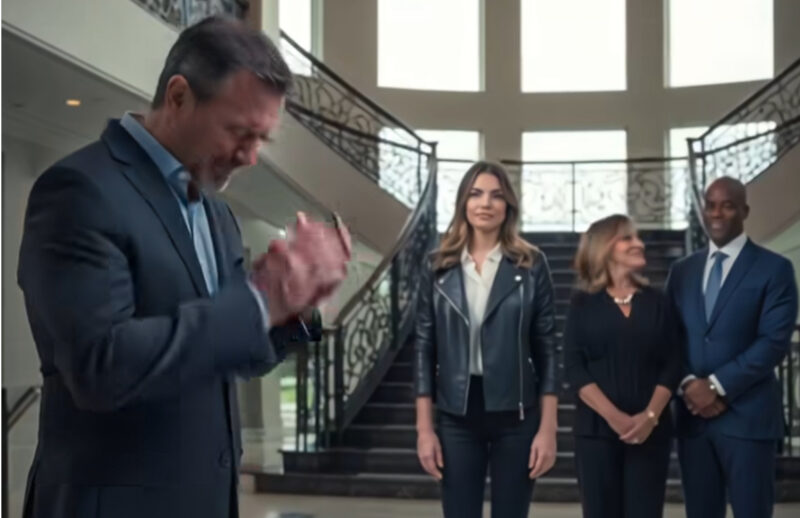
The next day, I went to see our family lawyer. “Lucas,” he said after I told him everything, “are you absolutely sure about this?”
“Completely,” I replied. “I want you to change all the beneficiaries. Everything that is in Sienna Anderson’s name goes to Miles. He has been more of a son to me than my own daughter.”
It took three hours to make the changes. When I left the lawyer’s office, I felt a strange sense of relief, as if a great weight had been lifted. The following years were the most peaceful of my life. I met Clara, a kind, hardworking accountant who loved me for who I was. Miles, who was studying engineering, became the son I had always wished for, visiting every Sunday. My brother Marcus passed away from a heart attack, a loss that brought Miles and me even closer.
When Miles turned twenty-one, I told him about the inheritance. He was quiet for a long moment. “Uncle,” he said, tears in his eyes, “this is a lot of money. Are you sure?”
“Miles,” I said, “you have been more of a son to me than my own daughter. You carry our family name with pride. Of course, I want you to have it.”
“Thank you, Uncle,” he said. “But more than the money, thank you for considering me a son. That’s worth more than any inheritance.”

Two years later, when Miles was twenty-three, life taught our family a final lesson in justice. An economic crisis hit the restaurant sector hard. Samuel Cross’s steakhouse chain went bankrupt. One by one, his restaurants failed. He had mortgaged the mansion to expand his business, and the bank foreclosed. The house with the pool, the house for which Sienna had abandoned me, was repossessed.
Five years after her wedding, my phone rang. It was Sienna.
“Dad,” she said, her voice broken, “I need to talk to you.” I could hear her ragged breathing, the sound of someone crying. “We’re going through a very difficult time. Samuel lost everything. We lost the house. Adrian and I had to move into a tiny apartment. I’m working at a call center at night just to pay the rent. I need your help. Financial help. Just a loan.”
“Sienna,” I said, my voice calm and even, “I don’t have that kind of money to lend.”
“Dad, please. I know you have savings. I know you were always very careful with your money.”
“And why do you think I would help you?”

“Because I’m your daughter. Because despite everything, I’m your blood.”
“My blood,” I repeated. “Sienna, the last time we spoke, you told me you were ashamed to carry my name.”
“Dad, I was confused. I was young. I didn’t know what I was saying.”
“You didn’t know what you were saying when you legally changed your last name? When you put me at a table in the back of your wedding? When you told Samuel to give you away instead of your own father?”
“Dad, please. I understand now that I was wrong. I understand now that you were always my real father. Samuel abandoned me as soon as he lost his money. You would have never abandoned me.”
“You’re right,” I said. “I would have never abandoned you. But you abandoned me.”
“Give me a chance to fix things.”
“Sienna, do you know the difference between you and Miles? Miles calls me every week just to ask how I am. Miles comes for lunch every Sunday. Miles proudly carries the Anderson name. When you decided my last name was an embarrassment, you didn’t just lose a father. You lost so much more.”
“What are you talking about?”
“I’m talking about the $200,000 inheritance your grandparents left for their beloved granddaughter. I’m talking about the $150,000 life insurance policy I paid for twenty years. I’m talking about the beach house that was going to be your wedding gift.”
There was a total, shocked silence on the other end of the line.
“All of that existed for Sienna Anderson,” I continued. “But Sienna Anderson doesn’t exist anymore, does she? Now you’re Sienna Cross.”
“Dad, all of that… it all still exists,” she stammered.
“It does,” I said. “But now Miles is the owner of it all. Because Miles actually carries the family name with pride.”
“You gave my inheritance to Miles?” she shrieked.
“No,” I said calmly. “I didn’t give your inheritance to Miles. I gave his inheritance to Miles. From the moment you changed your name, it stopped being yours.”
“Dad, please! Can we fix this? Can I change my name back?”
“For money?” I asked. “That’s exactly what I thought you would say.”
“No! It’s because I understand now that I was wrong.”
“Sienna,” I said, a deep sadness settling over me, “when you have a child, you’ll understand what it feels like to give everything for that person. And if that child ever tells you they’re ashamed of you, you’ll understand the pain you caused me. And when that happens, I want you to remember this conversation. I want you to remember that a father’s love isn’t infinite when there is no respect. I hope you do well in life. I hope you find happiness. But that happiness isn’t going to come from my family, because you’re no longer a part of it.”
 I hung up.
Six months later, Miles married his college sweetheart. At the wedding, he asked me to give the bride away. As we walked down the aisle, he whispered, “Thank you for showing me what a real father is.”
Years later, Miles and his wife told me they were expecting their first child, a boy who will carry the Anderson name with pride. The Anderson name will continue, carried by someone who respects and honors it, someone who understands that family isn’t about money or status, but about love, respect, and loyalty—three things Sienna never understood, and that Miles learned from a young age. Poetic justice took years to unfold, but in the end, it gave everyone exactly what they deserved.