
I Fired the Housekeeper on the Spot. But Then My Daughter, Who Hadn’t Spoken a Single Word in 11 Months, Suddenly Screamed Something That Left Me Frozen. And That Was When I Discovered a Photograph of My Late Wife…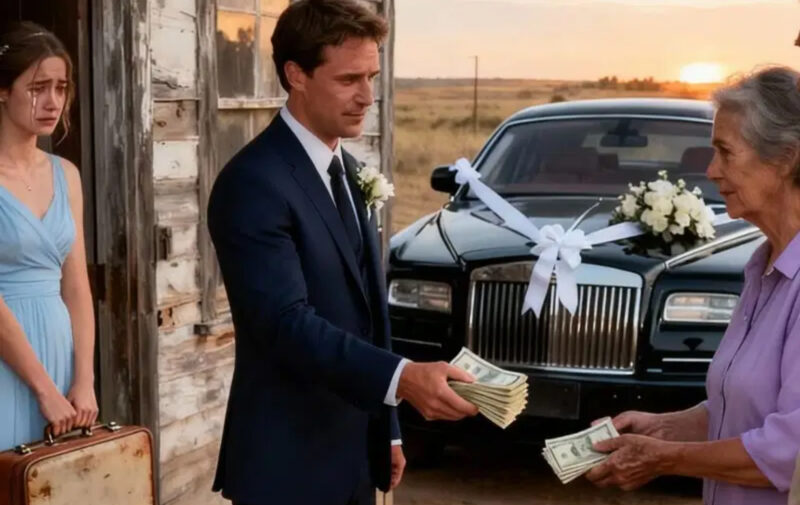
PART 1
“Get out of my house! I am not paying a nanny to make my daughter sleep on the floor like a beggar!”
Grant Holloway’s shout echoed through the living room of his estate in Greenwich, Connecticut.
In front of him, a 28-year-old woman knelt on the rug, shielding a sleeping little girl with her body.
It was 2:15 in the morning.
Grant, a 46-year-old real estate developer, had come home unexpectedly from a business trip to London after receiving an anonymous text: “Come back tonight and you’ll find out what your employee does with your daughter.”
What he found made him lose his temper.
His daughter Ruby, 6 years old, lay asleep on a blanket spread beside the sofa, clutching a worn stuffed rabbit.
Next to her was Tessa Morgan, the caregiver he had hired five months earlier.
“Mr. Holloway, I can explain,” Tessa whispered.
“Explain what? Why my daughter is sleeping on the floor when she has a bedroom that cost fifty thousand dollars?”
From the doorway, Doreen, the housekeeper, chimed in with obvious satisfaction.
“I warned you, sir. This girl does whatever she wants when you’re away.”
Tessa pressed her lips together.
“Ruby has nightmares. Upstairs she wakes up terrified. Down here, she can rest.”
“Then carry her to her bed!”
“I’ve tried. But she always comes back to this corner.”
Grant looked at his daughter.
Ever since his wife, Caroline, died in a car accident eleven months earlier, Ruby had not spoken a single word.
The doctors called it an emotional block brought on by grief.
He had tried to help by buying toys, hiring specialists, and renovating her bedroom.
And when nothing worked, he buried himself in work.
“Why here, of all places?” he asked angrily.
Tessa gently stroked the little girl’s hair.
“Because this is where her mother used to sit and read her stories. Ruby isn’t looking for a more comfortable bed. She’s looking to feel accompanied.”
For a few seconds, Grant had no answer.
Doreen spoke up again.
“Don’t let an employee question how you raise your daughter.”
Pride won out over shame.
“You’re fired, Tessa. Get your things and go.”
Bernadette, the cook, appeared in the doorway, alarmed.
“Sir, it’s pouring rain out there. At least let her wait until morning.”
“I said she leaves.”
Tessa didn’t argue.
She went upstairs to pack her small suitcase.
When she came back down, she leaned over and kissed Ruby on the forehead.
“When she wakes up, don’t leave her alone,” she told Grant. “Even if she doesn’t answer, she hears everything.”
She opened the front door.
A gust of cold air swept through the room.
Ruby woke with a start, reached for Tessa, and, seeing her leaving, ran barefoot to the entryway.
She wrapped herself desperately around Tessa’s legs.
And then something happened that left everyone frozen.
“Daddy, don’t send her away! Please, don’t take Tessa from me too!”
Grant felt his heart stop.
His daughter had just spoken after eleven months of silence.
But the worst was still to come, as Ruby lifted her face, soaked in tears, and added:
“Mommy died, you always leave… and Tessa is the only one who stays with me!”
PART 2
Grant stood motionless while Tessa tried to calm Ruby.
His daughter had just found her voice again, and he had made her first words a desperate plea.
Yet, too ashamed to take it back in front of his staff, he let Tessa walk out into the rain.
That night, Ruby cried herself to sleep in Bernadette’s arms.
Grant came down to the living room after everyone had gone to bed.
He sat on the rug.
For the first time, he remembered how Caroline used to settle in right here every night with Ruby, a blanket, and a storybook.
It was their little bedtime ritual.
Under the sofa, he found a blue notebook.
It belonged to Tessa.
It was filled with notes: the foods Ruby would accept, the memories that frightened her, the songs that managed to calm her.
A photograph slipped out from between its pages.
Grant recognized his wife immediately.
Caroline lay in a hospital bed, pale, holding the hand of a young woman in scrubs.
It was Tessa.
On the back of the photo was a line of handwriting:
“Caroline, I’ll keep the promise I made you. Your daughter will never be alone.”
The next morning, Ruby sat in front of the front door, hugging her rabbit, waiting for Tessa.
Grant called Walter, his driver.
“Do you know where she lives?”
“Bridgeport. I’ve driven her to visit her mother a few times.”
Forty minutes later, Grant stood in front of a modest apartment where Gloria, a retired seamstress, lived.
The woman greeted him with open indignation.
“My daughter came home last night devastated. Are you here to humiliate her some more?”
Grant held up the photograph.
“I need to know what happened that night.”
Gloria went pale.
“You really don’t know that my daughter lost her job at the hospital for helping your wife?”
She explained that Tessa had been a certified nursing assistant, and that an accusation of stealing a piece of jewelry had destroyed her career.
“Who accused her?”
“Someone who claimed to speak for your family.”
Grant slowly shook his head.
He had never filed any complaint.
Gloria added that Tessa had just left for the Stamford bus station, where she would catch a bus to Philadelphia to start another job.
Grant ran to the car.
At the station, he caught up with her just as she was about to board.
“Tessa, I need the truth.”
She looked at the photograph and answered, her eyes filling with tears:
“Your wife tried to call you before she died. Someone answered your phone and told her you didn’t want to talk to her.”
Grant felt the air leave his lungs.
Because that night, only one other person had access to his phone.
His business partner, Whitney.
PART 3
Tessa let the bus pull away.
It wasn’t because Grant asked her to.
It was because he took a drawing out of his pocket, one Ruby had made that morning.
On the paper were a rug, a sofa, a yellow moon, and two people hugging.
In one corner, far away, stood a man holding a suitcase.
“My daughter says that’s me,” Grant murmured. “And she’s right.”
Tessa studied the drawing for a long time.
Then she agreed to sit down with him in a coffee shop near the station.
There she told him what had happened eleven months before.
That night, Caroline had been brought into the emergency room at St. Gabriel Medical Center after a crash on the Merritt Parkway.
Tessa was finishing her shift when she was admitted.
The woman was still conscious, though her injuries were devastating.
She had asked over and over for her husband and her daughter.
“She asked to borrow my phone because hers had been destroyed in the crash,” Tessa explained. “We dialed your number four times.”
Grant remembered that afternoon perfectly.
Home Stories I Came Home in the Middle of the Night and Found My 6-Year-Old Daughter Sleeping on the Floor, Clinging to Her Nanny, While the Housekeeper Watched With a Smug Smile. “I’m Not Paying a Nanny to Let My Daughter Sleep on the Floor Like a Homeless Child!”
Part 2 of 3
He had been in a conference room with investors.
Whitney Sterling, his partner of twelve years, had held on to his phone to prevent interruptions.
“On the last call, a woman answered,” Tessa continued. “Caroline said, ‘It’s me, I need to speak to Grant.’ And that woman said you were busy and she should stop bothering you.”
Grant covered his face.
For eleven months he had believed Caroline died without even trying to say goodbye to him.
“I didn’t know she was hurt,” he whispered.
“Maybe the person who answered didn’t know either,” Tessa admitted. “But Caroline needed to talk to you.”
After that call, Caroline stopped trying.
She asked Tessa to stay by her side.
She talked about Ruby, her fear of leaving her alone, and the nights the two of them spent reading stories beside the sofa.
Before losing consciousness, she handed Tessa a small silver locket engraved with a moon.
“She asked me to give it to Ruby someday. And, if I could, to help her feel safe until her father found a way to be there for her.”
Tessa opened her purse and showed him the locket.
Grant recognized it.
He had given it to Caroline when their daughter was born.
“Why didn’t you ever give it to her?”
“Because after the funeral, I was accused of stealing it. I lost my job, and I was pushed out of the clinical placements I needed to finish my nursing degree. I was afraid that if anyone saw it in Ruby’s hands, they’d accuse me again and keep me away from her.”
Tessa explained that she had taken the nanny job months later, when she saw Grant’s listing.
She wanted to keep her promise.
And she wanted to help a little girl whose mother had died holding her hand.
“I never meant to take Caroline’s place,” she added. “I only wanted Ruby to be able to sleep without being afraid.”
Grant cried in front of her.
For the first time, he understood that this young woman, whom he had treated like a disposable employee, knew his daughter’s fears better than he did.
They went back together to St. Gabriel Medical Center.
Tessa’s former supervisor, Marianne Doyle, received them with surprise.
When she pulled up the file, she showed them the complaint filed after Caroline’s death.
There was no conviction and no criminal investigation for theft.
The hospital had terminated Tessa’s temporary contract after receiving threats of legal action.
At the bottom of the complaint was the name Whitney Sterling, who claimed to be acting on behalf of Grant Holloway.
“I never authorized this,” Grant said.
Marianne told them that a nurse had witnessed the handing over of the locket and was willing to testify.
But before they could say more, Grant’s phone rang.
It was Bernadette.
“Sir, come home right now. Miss Whitney has arrived with two people from a boarding program. She says you authorized Ruby’s enrollment and that they have to take her today.”
In the background, he could hear the little girl crying.
Grant ran out of the hospital.
When he reached the house in Greenwich, a van was parked out front.
One woman held a clipboard while another carried a small suitcase.
Doreen stood by the door.
Ruby was sobbing, clinging to the doorframe.
“I don’t want to go! I want to stay with Daddy!”
“Nobody is taking my daughter!” Grant shouted.
Whitney turned with unsettling calm.
“Grant, you need to think clearly. Ruby needs specialized care, and you can’t walk out on the company every time she has a crisis.”
She showed him an authorization form.
The signature was genuine.
Grant remembered a folder of documents Whitney had put in front of him weeks earlier.
He had signed several pages without reading them carefully.
The program representative, hearing the father’s explicit objection, ordered the departure halted.
“We can’t proceed under these circumstances,” she said. “The application will have to be reviewed.”
The van drove away.
Ruby ran to Tessa and clung to her.
“I knew you’d come back.”
Tessa knelt and hugged her.
Then she took out the locket.
“This was your mommy’s. She asked me to give it to you.”
The girl recognized the engraved moon.
When she opened it, she found a tiny photograph of Caroline holding her as a baby.
Ruby kissed the picture.
“Mommy used to say I was her little moon.”
Grant knelt beside them.
“And you always will be, sweetheart.”
Whitney watched the scene with mounting irritation.
“How touching. An employee accused of theft turns up with the missing jewelry, and now we’re all supposed to believe she’s a saint.”
Grant stood.
“I’ve seen the complaint, Whitney. It has your name on it.”
“I was trying to protect your family.”
“You also answered my phone that night.”
For the first time, Whitney lost her composure.
“We were closing a hugely important deal. I thought Caroline was calling again to ask when you’d be home. I didn’t know she was in the hospital.”
Grant stared at her, horrified.
“My wife died trying to talk to me. And you decided her call wasn’t important.”
“I won’t let you blame me for an accident.”
“I don’t blame you for the accident. I blame you for what you did afterward.”
Whitney picked up her purse.
Before leaving, she issued one last warning:
“Remember, I own thirty-five percent of your company. And there are documents you signed that you don’t even remember.”
When her car disappeared down the drive, Grant dialed the number the anonymous text had come from.
A phone began to ring.
It was in Doreen’s pocket.
The housekeeper turned pale.
She ended up confessing that Whitney had asked her to photograph Ruby sleeping on the floor and send that message.
In exchange, Whitney had promised her a house when she retired.
“I thought Tessa was taking advantage of the girl,” she sobbed.
“No,” Grant answered. “You saw how she cared for her, and you chose to stay quiet.”
Doreen admitted there was more.
Weeks before the accident, Caroline had discovered documents about her family’s stake in the company.
She had found out that Whitney was trying to obtain authority to manage, on Ruby’s behalf, the shares inherited from Caroline’s father.
Caroline put together a folder of copies.
She left the house that afternoon to warn Grant in person, because she couldn’t reach him.
After the funeral, Whitney asked Doreen to find the folder.
Doreen found it, but never handed it over.
“It’s in Mrs. Caroline’s old bedroom. In a box on top of the closet.”
Grant went upstairs with Tessa.
He hadn’t entered that room since the burial.
On the nightstand, a storybook still lay open.
On a chair rested one of Caroline’s cardigans.
Those everyday objects made him realize how long he had been avoiding the memory of his wife.
He found the box.
Inside were printed emails, draft powers of attorney, and correspondence between Whitney and a company lawyer.
On their own they weren’t enough to prove every crime Grant suspected, but they justified an investigation.
 Among the papers was a letter written by Caroline.
“Grant, our daughter doesn’t need another bedroom or more gifts. She asks for you every night. I know you work to give us a future, but I’m afraid that by the time you want to enjoy it, Ruby will have already learned to live without waiting for you.”
Further down was another line:
“If something ever happens to me, don’t let anyone decide for our daughter by putting our money first.”
Grant let the letter fall.
Tessa stayed beside him, not trying to comfort him with easy words.
That same night, Grant did something Ruby had never seen him do.
Home Stories I Came Home in the Middle of the Night and Found My 6-Year-Old Daughter Sleeping on the Floor, Clinging to Her Nanny, While the Housekeeper Watched With a Smug Smile. “I’m Not Paying a Nanny to Let My Daughter Sleep on the Floor Like a Homeless Child!”
Part 3 of 3
He turned off his phone.
He took off his shoes.
And he lay down on the rug beside his daughter.
“Are you going to sleep here, Daddy?” Ruby asked.
“If you’ll let me.”
“And tomorrow, will you leave?”
Grant looked at Tessa.
“Tomorrow I’ll have breakfast with you. Then we’ll go to the park.”
The girl took his hand.
“Then you can stay.”
But the next morning, an urgent summons arrived from the company’s board of directors.
Whitney had called an emergency meeting.
In front of the board, she accused Grant of neglecting his professional duties and of being swayed by a caregiver with questionable work history.
She even projected photographs of Ruby sleeping on the floor.
Grant presented Caroline’s documents, requested an independent audit, and asked outside attorneys to review the powers of attorney relating to his daughter’s shares.
Several board members agreed to investigate, but a majority voted to suspend him from his executive duties while the irregularities were sorted out.
Grant walked out of that meeting without an office.
And when he got home, he found even worse news.
Whitney had filed court actions challenging the management of the assets Ruby had inherited, claiming that her father was neglecting his obligations.
She couldn’t win custody of the child simply by being Grant’s business partner, but she intended to use the financial dispute to discredit him.
Over the following days, Grant hired a family law attorney and an independent team to review the company’s transactions.
He also began taking Ruby to a child psychologist.
She explained something no gift could ever fix: his daughter needed to rebuild trust through constant actions, not grand promises.
Grant learned to drive her to school, make her breakfast, and listen when she wanted to talk about Caroline.
One afternoon, Ruby asked:
“If the judge gets mad at you, will you leave too?”
Grant sat down at her level.
“I’m never going to stop being your dad, no matter what. And I’m going to do everything I have to do to take care of you.”
The night before the court hearing, Doreen came back.
She didn’t ask for her job.
She handed over the texts and voice messages Whitney had sent her, including the ones showing how she had orchestrated the campaign against Tessa.
Walter, the driver, also decided to testify.
He had seen Whitney using Grant’s phone that afternoon while Grant was in his meeting.
Phone records submitted later confirmed several calls from Tessa’s cell to the businessman’s number.
In family court, Grant’s attorney presented those testimonies, Ruby’s medical records, and the professional reports on her progress.
Marianne Doyle and the nurse who had worked with Tessa described what had happened at the hospital and the handing over of the locket.
Doreen admitted her part in the photographs used against the caregiver.
Whitney denied acting in bad faith.
But her explanations couldn’t justify hiding documents or the instructions she had given the household staff.
When it was Grant’s turn, he didn’t try to present himself as a perfect father.
“I worked too much and listened too little,” he admitted. “I thought paying for the best was enough. It wasn’t. My daughter was suffering and I didn’t know how to see it.”
The judge asked him what had changed.
“I used to be able to tell you what every object in her room cost. Now I know which story she loves, what scares her, and how she needs me to hold her when she remembers her mother. I can’t get back the time I lost. But I can be present from now on.”
After weighing the evidence, the court found no reason to alter Ruby’s custody, and she remained with her father.
It ordered that she continue receiving psychological support and rejected Whitney’s financial claims while the disputed documents were examined in the appropriate proceeding.
The corporate investigation continued separately.
Months later, an audit identified transactions carried out without the valid authorization required by the company’s bylaws.
Whitney stepped down from her executive roles, and claims were filed against her and the attorney who had advised her.
The hospital, after reviewing Tessa’s file, publicly acknowledged that it had acted hastily in terminating her contract without properly verifying the accusations.
They offered her job back.
But Tessa had other plans.
One afternoon she told Grant she wanted to go back and finish nursing school.
“My mother spent years sewing so I could go to school,” she explained. “I want to finish for her and for me.”
Grant offered to pay for her entire degree.
Tessa turned him down.
“I appreciate the thought, but I need to get back on my path on my own.”
He respected her decision.
He didn’t ask her to give up her dreams to keep caring for Ruby.
They agreed that Tessa would keep visiting, without replacing a father’s responsibility.
The goodbye was very different from that rainy night.
Ruby hugged Tessa by the front door.
“Are you coming back?”
“Of course. But now your daddy knows how to stay, too.”
The girl looked at Grant, who waited with his coat in his hand to walk her to school.
She smiled.
“Yeah. Even though he still burns the toast.”
All three burst out laughing.
One year passed.
Grant had returned to his company’s board, but he left the day-to-day running of it to a professional team.
He kept his afternoons free for Ruby.
Caroline’s old bedroom became a small family library, with photographs, storybooks, and a window overlooking the garden.
Tessa finished her degree and began working in pediatrics.
On graduation day, Gloria cried from the front row as she watched her daughter receive her diploma.
Beside her sat Grant and Ruby.
The little girl carried a bouquet almost as big as she was.
When the ceremony ended, she ran to Tessa and handed her a drawing.
It showed the same rug, the same sofa, and the same yellow moon.
But there was one difference.
This time there were three people holding hands.
Nobody stood apart.
Nobody carried a suitcase.
“Look,” Ruby said proudly. “Now Daddy is with us.”
Tessa stared at the paper, tears in her eyes.
That night they had dinner together.
Before bed, Ruby went up to her room, set Caroline’s locket on the nightstand, and climbed into her own bed.
Grant appeared in the doorway.
“Don’t you want to sleep by the sofa tonight?”
The girl shook her head.
“I’m not scared to be here anymore.”
Grant smiled.
“Then I’ll let you rest.”
But Ruby called out before he could leave.
“Daddy, can you stay until I fall asleep?”
He pulled up a chair and took her hand.
“Of course.”
“And tomorrow?”
“Tomorrow too.”
Ruby closed her eyes.
For a long time, Grant had believed the greatest gift he could give his daughter was a life of comfort.
It took losing his wife, nearly losing his company, and listening to a woman he’d barely noticed to understand what Caroline had been trying to tell him.
That night he had thrown out the only person who knew how to quiet Ruby’s fear.
Now he understood that Tessa had never wanted to replace anyone.
She had kept a promise alive until he learned to keep his own.
When Ruby fell asleep, Grant stayed beside her a while longer.
Moonlight came in through the window.
The little girl held his hand tightly, even in her sleep.
And at last he understood that a house can have every room in the world and still be empty.
Because what turns a house into a home isn’t what it cost to build, but finding someone who stays beside you when you’re afraid to close your eyes.