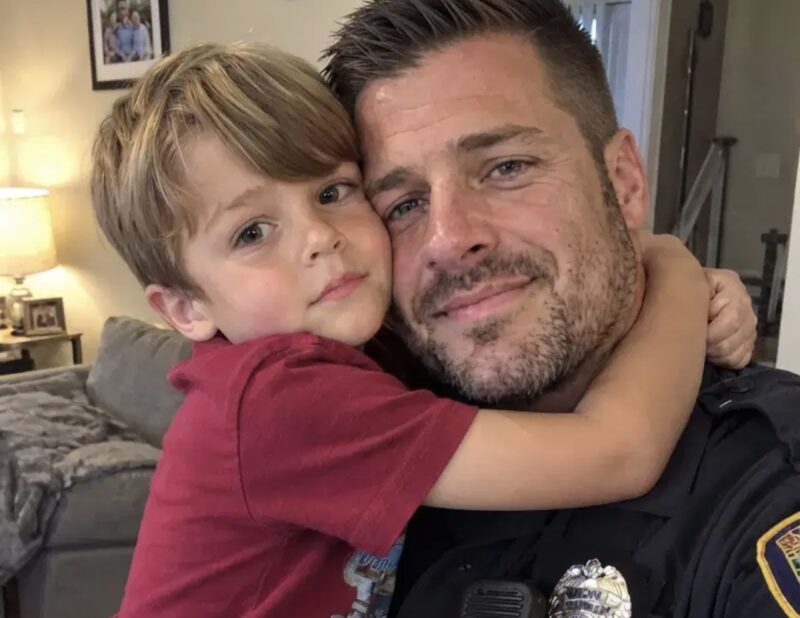
A police officer called me at work about my 17-year-old son. When I rushed home, what I discovered brought me to tears.
At 11:42 a.m., my phone started vibrating in my nursing uniform while I was caring for a patient.
I almost ignored it.
Three other patients were waiting, my shift was nowhere near finished, and I rarely answered unfamiliar numbers.
But something made me check.
“Hello?”
“Ma’am, this is Officer Benny Reyes. I’m calling about your sons.”
My heart nearly stopped.
“What’s happened? Are they alright?”
“Your children are safe,” he answered quickly. “But your older son has been involved in an incident. I need you to come home.”
I gripped the phone.
“Is Logan hurt? Has something happened to Andrew?”
“There’s no immediate danger. Please come home as soon as possible.”
Before I could ask another question, the call ended.
I stood frozen in the hospital hallway.
My seventeen-year-old son, Logan, had been struggling emotionally since his father’s death.
There had been a few misunderstandings with the police, and lately he’d been spending more time alone.
Now an officer was calling me about an incident involving him.
I imagined everything that could have gone wrong.
I hurried to the nurses’ station.
“Denise, I have a family emergency. I need to leave.”
My supervisor immediately stood.
“Go, Rachel. I’ll take care of your patients.”
I drove home with one thought repeating in my mind.
Please let my boys be alright.
But when I pulled into the driveway, I saw something I hadn’t expected.
Officer Benny was standing outside my house.
In his arms was my three-year-old son, Andrew, fast asleep.
His little red rain boots were on the wrong feet.
One hand still held a half-eaten cracker.
I rushed toward them.
“Officer! Where’s Logan?”
Benny looked at me seriously.
“Rachel, your older son did something extraordinary this morning.”
I stared at him.
“What do you mean?”
He shifted Andrew gently in his arms.
“Come inside. There’s something you need to hear.”
And when Logan finally told me what had happened on our elderly neighbor’s porch, I understood why he’d been disappearing on Tuesday evenings for months.
The truth was nothing like what I’d feared.
My name is Rachel.
I’m forty-one years old, and I’ve been a nurse for nineteen years.
At work, I know how to handle difficult situations.
I’ve assisted doctors during emergencies, comforted frightened patients, and learned to remain calm when everyone around me is worried.
But when it comes to my children, I’m just another mother who fears losing the people she loves.
Two years earlier, my husband, Daniel, passed away unexpectedly at forty-two.
He was a contractor who repaired kitchens, built decks, and seemed to know everyone in our small town.
He was always laughing.
Always humming.
Always finding ways to make ordinary days feel special.
One afternoon, while driving home from a job, Daniel experienced a sudden medical emergency.
He managed to pull his truck safely onto the roadside.
But he never made it home.
Another driver discovered him later.
The doctors explained that his condition had been severe and that immediate medical attention might not have changed the outcome.
Still, one thought haunted me.
Daniel had been alone.
For months afterward, I couldn’t stop imagining him sitting in his truck, waiting for help that never arrived.
Logan was fifteen when we lost him.
Andrew was only one.
Our family changed overnight.
I went from being a wife and mother to supporting two children on a single income.
The mortgage still needed paying.
There were household expenses.
Daycare fees.
Groceries.
School supplies.
I began accepting additional nursing shifts whenever possible.
But while I was working, Logan quietly stepped into responsibilities no teenager should have to carry entirely alone.
Every afternoon, he collected Andrew from daycare.
He walked him home, prepared snacks, helped him get ready for bed, and kept him entertained until I returned.
Sometimes I came home after eleven and found Logan sitting at the kitchen table, trying to finish his homework with Andrew asleep against his chest.
“Sweetheart, you should be in bed,” I’d whisper.
“He had a bad dream,” Logan would explain. “I didn’t want to wake him.”
Once, I discovered an envelope containing money on the kitchen counter.
Logan had sold the drum kit he’d begged for since childhood.
The note simply said:
For bills, Mom.
I cried when I found it.
He was only fifteen.
He shouldn’t have been worrying about mortgage payments.
But that was Logan.
Quiet.
Thoughtful.
Always trying to make life easier for someone else.
Unfortunately, grief changed him.
He stopped playing soccer.
He rarely laughed.
He spent hours alone in his room.
And sometimes, late at night, I heard the back door open and close.
I’d lie awake wondering where he was going.
I wanted to ask.
But I was afraid of the answer.
There had also been a few minor incidents that made me worry.
When Logan was fourteen, he and some friends organized an ill-advised bicycle race down a neighborhood hill.
A police officer stopped them and gave them a stern warning.
The boys were embarrassed, but nobody was seriously hurt.
A year later, Logan skipped an afternoon class to attend his best friend Marcus’s soccer tournament.
Marcus’s father had left years before, and his mother worked nights.
Logan didn’t want his friend looking into the stands and seeing nobody cheering for him.
The school contacted the authorities when they couldn’t locate him.
He received a suspension and a long lecture at home.
But I understood why he’d gone.
Then came the water tower incident.
Someone had painted graffiti on the side of a structure near the high school.
A witness mentioned seeing a teenager wearing a gray hoodie nearby.
Logan had walked past that location on his way home.
Officers questioned him, although he hadn’t been involved.
The actual teenagers responsible were identified shortly afterward.
Still, I remembered sitting beside Logan while he answered questions.
He looked so tired.
So disappointed.
“Mom, I didn’t do anything,” he whispered afterward.
“I know, honey.”
But inside, I worried.
Our small town was full of people who remembered every mistake.
And I feared that Logan was slowly becoming known for things that didn’t reflect who he truly was.
One evening, I sat beside him on his bed.
“Please be careful,” I said. “People make assumptions, and I don’t want anything bad to happen to you.”
He looked at me.
“Okay, Mom.”
Then he promised he’d stay out of trouble.
I believed him.
But the worry never completely disappeared.
That was why Officer Benny’s call frightened me so badly.
I spent the entire drive home imagining Logan had become involved in something serious.
Instead, when I entered the house, he was standing beside the kitchen counter holding a glass of water.
His gray hoodie was wrinkled.
His hair was untidy.
And he looked nervous.
“Logan!” I exclaimed.
“Mom?”
“What happened?”
Before he could answer, Officer Benny gently placed Andrew on the couch and covered him with a blanket.
Then he turned toward me.
“Rachel, your son hasn’t done anything wrong.”
I stared at him.
“Then why did you call?”
Benny looked toward Logan.
“Go ahead, son. Tell your mother.”
Logan rubbed the back of his neck.
“It’s really not a big deal.”
Benny shook his head.
“It absolutely is.”
I folded my arms.
“Logan, please explain.”
He took a breath.
“This morning, Andrew wanted to go see the Jacksons’ dog.”
“Rufus?”
“Yeah. He kept asking, so I took him for a walk.”
I nodded.
“We were passing Mr. Henson’s house when I heard something fall.”
I knew Walter Henson.
He was seventy-eight, lived four houses down, and had been a widower for years.
Every summer, he grew enormous tomatoes and gave them away to neighbors.
After Daniel’s funeral, Walter had brought us homemade chili.
He hadn’t stayed long.
He’d simply told me that grief never disappeared completely, but people gradually learned how to live with it.
I’d never forgotten his kindness.
Logan continued.
“Mr. Henson was lying on his porch beside the swing.”
My stomach tightened.
“What happened to him?”
“He wasn’t responding normally.”
Benny stepped forward.
“Walter experienced a serious cardiac emergency.”
I looked at Logan.
“What did you do?”
He lowered his eyes.
“I told Andrew to stay by the fence. Then I called 911.”
The officer nodded.
“The emergency dispatcher guided Logan through the situation.”
Logan’s voice became quieter.
“Mr. Henson stopped breathing normally. The dispatcher told me to start chest compressions.”
I stared at my son.
“You performed CPR?”
He nodded.
“For almost six minutes,” Benny explained.
My hand flew to my mouth.
I knew exactly how physically exhausting CPR could be.
Even trained medical professionals often rotated during prolonged resuscitation efforts.
Yet my seventeen-year-old son had continued helping an elderly neighbor until emergency responders arrived.
“The dispatcher counted with him,” Benny said. “Logan followed the instructions and didn’t leave Walter’s side.”
I looked at Logan.
He was staring at the floor.
Then he whispered something that made my eyes fill with tears.
“I didn’t want him to be alone, Mom.”
For a moment, the kitchen went completely quiet.
I understood immediately.
Daniel.
The roadside.
The truck.
The thought that his father had spent his final moments without family nearby.
Logan had carried that memory for two years.
And now, when he found someone else in trouble, he refused to walk away.
“Did Mr. Henson survive?” I asked.
Benny smiled gently.
“He’s alive. The paramedics restored his heartbeat, and he was conscious during transport.”
I exhaled.
“Thank goodness.”
“He’s at St. Agnes,” Benny added. “Your hospital.”
Then he looked toward Logan.
“The medical team believes the CPR he received before the ambulance arrived was very important.”
Tears rolled down my face.
My son had helped save a life.
The same teenager I’d spent months worrying about had been quietly preparing himself to help someone in an emergency.
But I still had one question.
“What happened to Andrew while you were helping Mr. Henson?”
Benny explained that he and another officer had been patrolling nearby.
They noticed Andrew standing beside a fence, calling for his brother.
When they approached, they saw Logan assisting Walter while speaking with the emergency dispatcher.
One officer helped Logan.
The other stayed with Andrew.
After the ambulance left, Benny brought both boys home.
“I knew your family,” he explained. “I thought it would be better to tell you in person.”
Then he looked at me apologetically.
“I’m sorry my phone call sounded alarming.”
I gave a shaky laugh.
“You nearly gave me a heart attack yourself.”
He smiled.
“That’s what my wife tells me about my telephone manners.”
Just then, Andrew woke up.
He climbed off the couch, shuffled toward Logan, and wrapped his arms around his older brother’s leg.
“Logan?”
“Hey, buddy.”
“You were helping the man?”
“Yeah.”
Andrew looked thoughtful.
“Is his heart okay now?”
Logan swallowed.
“He’s getting better.”
Andrew hugged him tighter.
I couldn’t stop watching them.
My seventeen-year-old son stood there in his old gray hoodie, holding his little brother close.
And suddenly, I saw something I’d been too frightened and exhausted to recognize.
Logan wasn’t becoming irresponsible.
He was becoming someone remarkably compassionate.
Before leaving, Officer Benny hesitated.
“Rachel, there’s something else I should tell you.”
I looked up.
“The water tower incident.”
Logan went still.
Benny sighed.
“I was one of the people who suggested questioning Logan because someone mentioned a teenager in a gray hoodie.”
He looked directly at my son.
“That wasn’t fair. I let earlier misunderstandings influence my judgment.”
Logan blinked.
“I’m sorry,” Benny continued.
My son nodded quietly.
Then Benny turned toward me.
“You told me once that you were worried about the kind of young man Logan was becoming.”
I remembered.
We’d run into each other at the grocery store several weeks earlier.
I’d been exhausted after work and unexpectedly started talking about my fears.
Benny had listened patiently.
Now he smiled.
“Rachel, I think your son is growing into someone you can be very proud of.”
After he left, I turned toward Logan.
Then I hugged him.
At first, he stiffened in surprise.
Teenage boys aren’t always comfortable with unexpected affection.
But after a moment, he wrapped his arms around me.
“Mom, it’s okay.”
I shook my head.
“No, sweetheart. I’ve been so worried about you.”
He looked confused.
“Why?”
“Because I thought I was losing you.”
His expression softened.
I continued.
“I thought I was the only one trying to keep this family together.”
He looked at Andrew, who was still standing beside us.
Then he looked back at me.
“No, Mom.”
He smiled faintly.
“We’re doing it together.”
That afternoon, after Andrew fell asleep, Logan and I sat on the back porch.
The old wooden swing set Daniel had built years earlier stood in the yard.
For a while, neither of us spoke.
Then I asked, “How did you know what to do?”
Logan shrugged.
“The dispatcher helped.”
“I know. But you must have learned something before today.”
He stared at his hands.
Finally, he nodded.
“I took a CPR class.”
I turned toward him.
“When?”
“Last fall. At the community center.”
I frowned.
“Why didn’t you tell me?”
He hesitated.
“Because of Dad.”
I felt my throat tighten.
“I kept thinking about what happened on the road,” he continued.
“I know the doctors said everything happened quickly. I know they said there might not have been anything anyone could do.”
He paused.
“But I kept wondering what would’ve happened if someone nearby had known CPR.”
I reached for his hand.
“So you took a class?”
He nodded.
“On Tuesday evenings.”
I stared at him.
“Those were the nights you said you were with Marcus.”
“Yeah.”
Suddenly, months of worry came rushing back.
All those evenings I’d imagined him getting into trouble.
All those nights I’d wondered whether he was keeping dangerous secrets.
He’d been learning how to respond to emergencies.
“Why didn’t you tell me?”
He gave a sad little smile.
“Because I knew you’d cry.”
I covered my mouth.
“And you already cry enough, Mom.”
I laughed through my tears.
Then I asked something else.
“What about those late-night walks?”
He looked surprised.
“You heard me leaving?”
“Logan, I’m your mother.”
He sighed.
“Sometimes I can’t sleep. I keep thinking about Dad, and everything feels too loud in my head.”
He looked toward the backyard.
“So I walk around the neighborhood until I feel calmer.”
My heart ached.
“You could’ve told me.”
“I didn’t want to worry you.”
I moved closer.
“Sweetheart, you never have to protect me from your feelings.”
He looked at me.
“If you’re sad, tell me. If you can’t sleep, come talk to me. Even if it’s three in the morning.”
He nodded.
“Okay.”
I squeezed his hand.
“And if I cry, that’s alright too.”
He smiled.
“Deal.”
The following morning, I took both boys to St. Agnes Hospital.
Walter Henson was recovering in the cardiac unit.
When we entered his room, he was sitting upright with his reading glasses on, working on a crossword puzzle.
He looked toward the doorway.
Then he saw Logan.
“Well,” he said warmly, “there’s the young man I’ve been waiting to thank.”
Logan immediately looked embarrassed.
“Hi, Mr. Henson.”
Walter reached for his hand.
“They tell me you helped keep me alive until the ambulance arrived.”
Logan nodded.
“I just did what they told me.”
Walter smiled.
“Sometimes doing exactly what’s needed is the bravest thing a person can do.”
His eyes filled with tears.
“I remember hearing someone’s voice. I don’t remember every word, but I knew someone was beside me.”
He squeezed Logan’s hand.
“I thought I was alone. You made sure I wasn’t.”
I turned toward the window, trying to compose myself.
Then Andrew stepped forward.
He reached into his pocket and pulled out a slightly squashed butterscotch candy.
Walter often gave him those candies when we passed his house.
Andrew held it out.
“For you.”
Walter smiled.
“For me?”
Andrew nodded seriously.
“For your heart.”
Walter accepted it gently.
“I usually give these to you.”
Andrew smiled.
“Now it’s my turn.”
Everyone in the room laughed.
On the drive home, Logan was unusually quiet.
Finally, he asked, “Mom?”
“Yes?”
“Do you think Dad would’ve been proud?”
I pulled into a safe parking space.
Then I turned toward him.
“Logan, your father would’ve told everyone in town what you did.”
He looked down.
I continued.
“He would’ve called his brother, his old friends, and every person he’d ever worked with.”
My voice began trembling.
“He would’ve been so proud of you that he wouldn’t have known what to do with himself.”
Logan smiled.
“And I feel exactly the same way.”
Over the following weeks, people around town began hearing about Logan’s actions.
His principal wanted to recognize him at a school assembly.
Logan was horrified.
“Mom, absolutely not!”
I laughed.
“It’s just a certificate.”
“In front of the whole school?”
“You’re allowed to be proud of yourself.”
He shook his head.
We eventually agreed on a small presentation in the principal’s office.
But something else changed.
Logan began smiling more often.
He talked about returning to soccer.
He spent more time with Andrew.
And one evening, while I sat at the kitchen table, I heard him humming as he washed the dishes.
I stopped what I was doing.
It was a familiar tune.
One Daniel used to hum around the house.
I hadn’t heard Logan hum in more than a year.
For a moment, I closed my eyes.
It felt as though a small piece of our family had found its way home.
That night, around eleven, I heard footsteps in the hallway.
Then a gentle knock on my bedroom door.
“Mom?”
“I’m awake, sweetheart.”
Logan opened the door.
He was wearing Daniel’s old blue hoodie.
“I can’t sleep.”
I pulled back the blanket beside me.
“Come sit.”
He hesitated.
“I’m seventeen, Mom.”
I smiled.
“And?”
He laughed softly.
Then he sat beside me, leaning against the headboard.
For several minutes, we said nothing.
Eventually, he rested his head against my shoulder.
I didn’t move.
I simply sat there with my son, remembering how often I’d worried about our future.
For two years, I’d believed it was entirely my responsibility to hold our family together.
To pay every bill.
Solve every problem.
Protect both boys.
And make certain nothing terrible happened again.
But I’d overlooked something important.
My oldest son had been helping carry our family through those difficult years.
Not because he had to replace his father.
Not because I expected him to become an adult before his time.
But because he loved us.
And when he had the opportunity to help a neighbor, he showed that same compassion to someone outside our family.
I gently rested my cheek against his hair.
For so long, I’d been watching for signs that Logan might become someone I couldn’t recognize.
I had almost missed seeing the wonderful young man he already was.
And that night, as he slept peacefully against my shoulder, I finally allowed myself to believe something I hadn’t believed since Daniel died.
We were going to be alright.
Not because life would suddenly become easy.
But because we had each other.
And sometimes, that is more than enough.