This house belongs to us now. Get out,” she smirked. I didn’t argue. I simply pulled one document from my purse. The color drained from my husband’s face because he had no idea what my aunt had kept hidden for eleven years.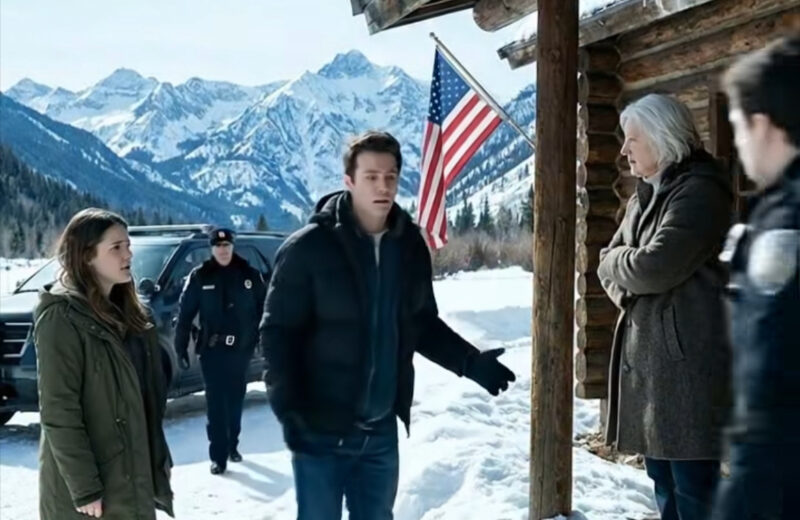
Part 1
I walked fast down our quiet suburban street, holding my two children by the hand. I could barely keep the excitement off my face.
Earlier that day, I had learned something that would change our family’s future in ways I never imagined.
My aunt, who had died recently, had left me $24 million.
She had also left me a controlling share in an office skyscraper in Manhattan.
But there was one more discovery, and it shocked me even more.
The beautiful house where my husband and I had lived for eleven years did not belong to him. He had always talked about it as if it were his. But legally, the house was owned by my family’s trust.
I was still trying to wrap my head around all of it. All I wanted was to get home and tell my husband. I pictured myself explaining the inheritance and what it could mean for our kids.
Then we turned into our driveway, and I knew something was wrong.
Bryce was standing on the front porch.
He was not alone.
A woman stood beside him, relaxed and comfortable, as if she belonged at my front door.
Two suitcases sat near the door.
I knew them right away. They were mine.
I stopped walking.
Before I could ask what was going on, the woman looked at me and smiled. Then she spoke as if she had every right to decide whether I could go into my own home.
“You should start looking for somewhere else to stay. There’s no room here for someone who doesn’t contribute anything.”
My eight-year-old daughter squeezed my hand tighter. She stood close to my side, staring at the stranger with worried eyes.
Bryce stepped forward. He was holding a stack of divorce papers.
For a moment, I looked from the papers to the suitcases by the door. Then my eyes went back to the woman.
That was when I saw her earrings.
They were my pearls.
She was already wearing something that belonged to me.
I understood what they expected. They thought I would be stunned and upset, and that I would have no idea where to go. In their minds, the decision was made, and all I had to do was accept it.
But they did not know what I had learned that day.
I looked at the suitcases one more time.
Then I smiled.
“Before you start moving your furniture in,” I said calmly, “there’s something you need to know about who really owns this house.”
Bryce stared at me.
The woman beside him looked just as confused.
Neither of them had any idea why I was smiling.
Not yet.
Part 2
The News I Had Waited Eleven Years to Hear
My name is Whitney Larkin. I was thirty-six years old, married to Bryce Larkin, and raising our two children in a lovely four-bedroom house in Westchester County, New York.
Our daughter, Tatum, was eight. Our son, Hudson, had just turned five.
For eleven years, I believed our marriage was built on the everyday sacrifices that two people make while building a future together.
Bryce ran a consulting company in White Plains. I worked from home, editing medical documents, usually after the kids had gone to bed.
Some nights I stayed up until two in the morning because Bryce needed money for another business expense.
Once, I sold a gold bracelet my mother had given me so he could pay the rent on his first office.
Whenever I worried about our money, Bryce reminded me that he was the one who provided our home.
“Whitney, you have no idea what it takes to keep this family comfortable,” he liked to say.
I used to believe him.
But that Tuesday morning, everything changed.
I had an appointment with an estate attorney in Manhattan about my aunt, Marguerite Ellison, who had passed away six weeks earlier.
Aunt Marguerite never married and never had children. She owned commercial buildings and investments, but she lived simply and hated talking about money.
She had always been especially close to me.
“Your aunt left you $24 million in cash and investments,” Francine said. “She also left you a controlling interest in the Ellison Tower on Lexington Avenue.”
I stared at her. I think I stopped breathing.
“There’s more,” she said, and slid a thick folder across the table. “Eleven years ago, the week you married, your aunt bought the house in Westchester. She put it into the Ellison Family Trust, with you as the only beneficiary. Your husband has never been on the deed.”
“But Bryce told me he bought it. He said the bank approved him.”
“He signed a lease-to-own agreement with the trust,” Francine said. “Your aunt arranged it quietly through a property manager. For eleven years, the monthly payments he made went into your trust. The title never transferred.”
“Why would she hide that from me?”
Francine opened a sealed envelope. Inside was a letter in my aunt’s neat handwriting.
Whitney, I never told you because I didn’t want to poison your marriage with my doubts. But I watched how Bryce talked about money, and about you. If I was wrong about him, this letter changes nothing. If I was right, you will have a roof over your head and a way to protect your children. Love, Aunt Marguerite.
I read it twice. Then I asked Francine to certify copies of everything, the deed, the trust papers, and the lease agreement, and put them in my purse.
I had no idea I would need them that same afternoon.
Part 3
The Porch
“Whose house?” Bryce said, and laughed. It was a short, ugly sound. “Whitney, don’t embarrass yourself in front of the neighbors.”
I looked past him. Mrs. Pruitt next door was pretending to water her roses. Two doors down, a man had stopped mowing his lawn.
The woman beside Bryce folded her arms. Her name was Delaney, I would learn later. She was twenty-nine and worked at his office. She wore a sundress I had never seen and my grandmother’s pearl earrings.
“Honey, I think she’s in shock,” Delaney said sweetly. “It happens. Bryce, give her the papers.”
He held them out. “Sign them. I’ve been generous. You can have the minivan and two thousand a month until you find work. I’m keeping the house and the kids will stay here with me.”
“The kids,” I said.
“They’ll be better off in a stable home.”
I felt Hudson lean against my leg. He was five and didn’t understand, but he knew that voice. Tatum stood very still, the way she does when she is trying not to cry.
“Tatum, sweetheart,” I said quietly, “take your brother to Mrs. Pruitt’s. Tell her I’ll be there in a few minutes.”
Mrs. Pruitt had already put down her hose and was holding out her arms. The children crossed the lawn. Tatum looked back once, and I nodded to her.
Then I turned around.
“Bryce, I’m going to say this once, calmly. Take your hand off those suitcases.”
“Or what?” Delaney said. “You’ll call the police? On the people who live here?”
“Yes, please do,” I said, and opened my purse.
I took out the first document and held it up so both of them could see the seal.
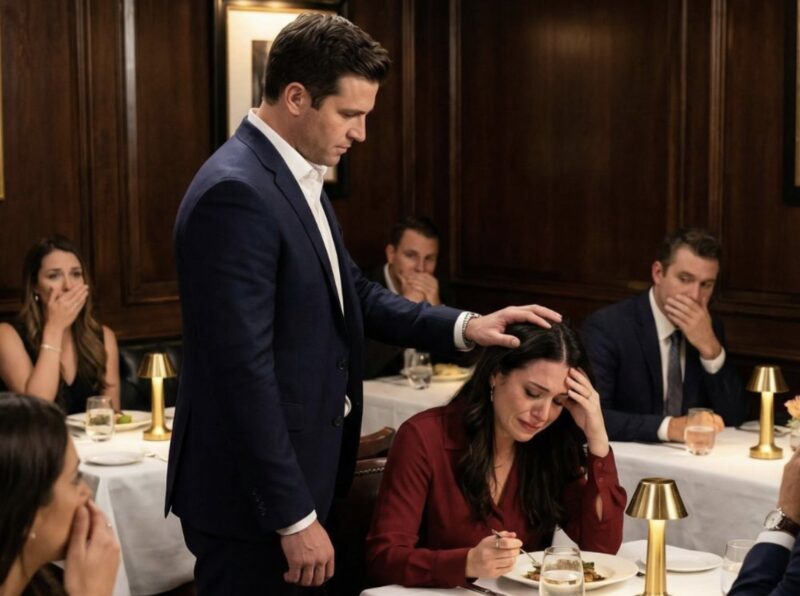
“This is the deed to this property. Certified copy, issued this morning. The owner is the Ellison Family Trust. The sole beneficiary is me.”
Bryce’s smile twitched. “That’s ridiculous. I pay the mortgage.”
“You pay rent,” I said. “Under a lease-to-own agreement you signed eleven years ago. You never read past the second page, did you? The ownership clause is on page nine.”
He snatched the paper and scanned it. I watched the color leave his face, starting at his forehead.
“This isn’t real.”
“It’s recorded with Westchester County. You can check. My attorney’s number is on the back.”
Delaney leaned over his shoulder. “Bryce, what does she mean, rent? You told me you owned this place. You said your name was on everything.”
“I do own it,” he snapped. “Whitney, this is some kind of trick.”
“There’s more,” I said, and took out the second document, a letter on thick cream paper. “Page four of the lease. If the tenant, that’s you, brings an unauthorized occupant onto the property, or attempts to deny the beneficiary access, the lease terminates immediately. The trust can demand possession within seventy-two hours.”
He looked up slowly. “Unauthorized occupant.”
Everyone turned to look at Delaney.
“Excuse me?” she said.
“You’re standing on my front porch wearing my grandmother’s earrings,” I said. “And I’d like them back.”
For a moment, nobody moved. Then Delaney’s hand flew to her ear. “Bryce said they were a gift from his mother.”
“His mother passed away six years ago,” I said. “She never owned pearls like that. My grandmother did.”
Delaney unhooked the earrings and dropped them into my palm like they were hot. She took a step away from him.
“You told me she was a deadbeat,” she said. “You said the house was yours free and clear. You said she was living off you.”
“Delaney, wait,” Bryce said.
“You said she’d never fight.”
Home Stories I rushed home with my two kids to tell my husband I’d inherited $24 million and a share of a Manhattan skyscraper. Instead, I found him on the porch with his mistress, divorce papers, and two suitcases packed with my clothes.
Part 3 of 3
“I never said…”
“Mr. Larkin,” I interrupted. “One more thing, since we’re being honest.”
I took out the last paper. My hands were steady, and I was surprised by that.
“When you started your consulting company, you took out a business loan for $180,000. A private lender backed it with a personal guarantee. Do you remember who the guarantor was?”
He swallowed. “The bank.”
“Marguerite Ellison. My aunt. For eleven years she quietly covered the payments whenever your company fell behind. Four times, according to her records. You thought your business was succeeding on its own.”
“That can’t…”
“She never wanted you to know. But the guarantee passed to her estate when she died, and now the estate is mine.” I folded the paper once. “As of this morning, I’m the lender.”
He stared at me. His mouth opened and closed.
“Do you understand what I’m telling you, Bryce? The house, the loan that built your company, the roof over your head. It was never yours. It was a gift from a woman who spent eleven years protecting a family you were ready to throw away.”
The Aftermath
For about ten seconds, the only sound was Mr. Alvarez’s lawn mower, idling two doors down.
Then Delaney picked up her purse. “I’m going to call my sister to come get me,” she said stiffly. She did not look at Bryce. “I don’t know what is going on here, but I’m not part of it.”
“Delaney, we’re together,” he said, grabbing her wrist.
She pulled it free. “You lied to me about everything. Every single thing.” She walked to the end of the driveway and sat on the curb with her phone, the way you wait for a bus you don’t trust.
Bryce turned back to me. The man who had lectured me for eleven years about what it took to keep a family comfortable looked small.
“Whitney,” he said, in a voice I hadn’t heard since our wedding. “Let’s talk about this inside. We can fix this. Think about the kids.”
“I am,” I said. “That’s the only reason I haven’t called the police yet.”
“For what? We were just talking.”
“You put my belongings on the porch. You brought another woman to my home. You told me my children would stay with you.” I tucked the papers back into my purse. “You have until Friday at five to remove your things. The trust will send you formal notice, and it will go through my attorney. You can speak to her about the loan, too.”
“You can’t just throw me out.”
“I’m not throwing you out,” I said. “I’m giving you three days, which is more than you gave me.”
He looked at the two suitcases, my old green ones from college, packed with clothes I had folded myself. He had even zipped them.
For the first time that day, I felt something close to pity. It was brief and quiet, and I let it go.
“One more thing,” I said. “My lawyer will file for divorce on Monday. I’ll be asking for primary custody. If you want to see the kids, you’ll do it on a schedule and with respect. Starting now.”
He didn’t answer. After a while he sat down on the top step of our porch, and I understood he had nothing left to say.
I picked up my suitcases myself and carried them inside.
Eleven Years Later, in One Afternoon
That night, after the children were asleep, I sat at the kitchen table with my aunt’s letter and a cup of tea I never drank.
I wasn’t angry anymore. I was tired in a way that felt clean, like the end of a long fever.
I thought about Marguerite, who had never married and never explained herself, and who had looked at my husband across a wedding table and quietly decided to build a safety net under my life. She had waited eleven years for me to need it. She never said “I told you so.” She just made sure I would land on my feet.
In the weeks that followed, the facts came out one by one. Bryce’s company was nearly insolvent. He had been borrowing against future contracts to cover his spending, and Delaney was one of three women he had been seeing. Once the loan guarantee became public, his clients grew nervous, and two of them left. The business closed by spring.
I did not gloat. I hired a good attorney, kept every document, and let the court do its work. The divorce was finalized in nine months. I kept the house, which had been mine all along, and was awarded primary custody. Bryce got weekends and one weeknight dinner, and he took them seriously after that. I think losing everything finally taught him what he had.
I kept the tower, too, but not the way Bryce would have. I hired a property manager, kept the existing tenants, and used part of the income to open a scholarship in my aunt’s name for single mothers returning to school. I called it the Marguerite Fund. Tatum helped me pick the logo, a small blue door.
“Why a door, Mom?” she asked.
“Because every family should have one that’s theirs,” I said.
The Last Word
Last spring, on a warm Saturday, I stood on that same porch watching Hudson chase the neighbor’s dog across the lawn. Tatum sat on the steps with a book, nine years old and already too grown-up for her own good.
“Mom?” she said without looking up. “That day, when you told me to go to Mrs. Pruitt’s, I wasn’t scared.”
“No?”
“I thought you looked like Aunt Marguerite.”
I laughed, and my eyes stung. “That’s the nicest thing anyone has ever said to me.”
I wore my grandmother’s pearls that day. I wear them often now.
People sometimes ask whether I wish I had found out sooner, whether I’d have saved myself those eleven years. I don’t think so. Without them, I wouldn’t have learned what I was capable of. I wouldn’t have seen how much love had been working quietly behind me, in a woman who never asked to be thanked.
I only wish I could tell her what I figured out that afternoon, standing on my own porch with a purse full of paper.
The people who underestimate you are never the ones who decide what you’re worth.
The End.