
My parents ignored my baby’s birth to celebrate my sister’s newborn—then I discovered what they were planning to do with my house
I spent six years conducting research in Antarctica, surviving freezing storms, brutal winds, and temperatures that could turn exposed skin numb in seconds.
But nothing prepared me for the coldness of my own family.
My younger sister and I gave birth on the same day, in the same hospital, just two rooms apart.
My parents spent nine hours celebrating her baby boy with flowers, balloons, gifts, and a beautiful cake.
They never once came to see my newborn daughter.
When I finally called, Mom sighed.
“Odalie, we’re exhausted. We’ve been here all day.”
“Mom, I gave birth today, too.”
Dad grabbed the phone.
“Your sister needed us. You’ve always been independent!”
I looked at my little girl sleeping beside me.
Then I whispered, “I understand.”
But I didn’t.
Especially considering that for almost four years, I’d been sending my parents $1,200 every month to help pay their mortgage.
And while they were celebrating my sister’s baby, they were secretly planning something that would change everything.
My name is Odalie Parkinson.
I’m thirty-two years old, a research scientist, and someone who has spent much of her adult life studying the atmosphere in Antarctica.
For six years, I worked at McMurdo Station, enduring freezing temperatures, exhausting assignments, and long months away from home.
I’d learned to handle difficult circumstances without complaining.
Unfortunately, my family mistook that independence for an unlimited willingness to sacrifice.
My younger sister, Medelli, had always been the center of attention.
If she needed money, Mom and Dad found it.
If she made a mistake, someone helped her.
If she wanted something expensive, the entire family somehow became responsible for making it happen.
I was different.
I paid my own tuition.
I worked hard.
I built a successful career.
And whenever my parents faced another financial emergency, I was the person they called.
At thirteen, they forgot to collect me from a regional science competition.
Their explanation?
“You’re so responsible, Odalie. We knew you’d figure something out.”
Years later, when their heating system needed replacement, they called me immediately.
I paid the $7,800 bill.
When they struggled with mortgage payments, I agreed to contribute $1,200 every month.
I believed I was helping my parents enjoy a more comfortable retirement.
I didn’t realize I’d become their permanent financial safety net.
Then I got pregnant.
My husband, Ben, and I were thrilled.
We’d been preparing our home for months.
We painted the nursery, assembled the crib, and selected tiny outfits for our daughter.
I thought becoming a grandmother might finally encourage Mom to treat my child with the same enthusiasm she showed Medelli.
But I was wrong.
In an extraordinary coincidence, Medelli and I went into labor on the same Thursday in late October.
We were admitted to the same hospital.
Our rooms were only a short distance apart.
Medelli delivered a son named Oliver.
I welcomed a daughter named Eleanor.
Mom and Dad arrived carrying expensive flowers, balloons, and an enormous stuffed giraffe.
But none of those gifts were meant for my baby.
They went straight to Medelli’s room.
Hours passed.
My parents remained there.
At six fifteen that evening, I finally called Mom.
“Are you coming to meet Eleanor?” I asked.
She sounded annoyed.
“Honey, we’re absolutely worn out. We’ve been sitting here all day.”
I stared at the hospital ceiling.
“I’m in the same building, Mom.”
“Medelli had a difficult delivery.”
“So did I.”
Dad interrupted from the background.
“Tell her we’re tired!”
Then he took the phone.
“Odalie, we’ve been uncomfortable in hospital chairs for nine hours. Your sister needs support.”
I looked down at Eleanor.
Her tiny fingers were curled beside her cheeks.
“Dad, I just spent twenty-two hours giving birth.”
He sighed.
“You’ve always been more capable than your sister.”
Those words settled heavily in my chest.
Once again, my independence was being used as a reason to give me less.
“All right,” I whispered.
I ended the call.
Then I cried.
A nurse named Denise entered moments later.
She was an experienced maternity nurse with kind eyes and a practical manner.
After checking Eleanor, she noticed my empty visitor chairs.
“Your family is visiting your sister?” she asked.
I nodded.
Denise studied my face.
“Would you like me to help with anything?”
“No. They’re adults. They can make their own choices.”
She gently adjusted my daughter’s blanket.
“What’s her name?”
“Eleanor.”
“That’s beautiful.”
I smiled faintly.
Denise looked toward the hallway.
Then she said, “I’m going to check on something.”
I assumed she meant hospital paperwork.
But shortly afterward, my husband returned from the cafeteria looking deeply troubled.
He wasn’t carrying the food he’d gone to buy.
“Ben? What’s wrong?”
He closed the door.
Then he sat beside my bed.
“Odalie, your parents aren’t simply ignoring us.”
My stomach tightened.
“What do you mean?”
He took a breath.
“They’re planning to move your sister into our house.”
For a moment, I thought I’d misunderstood.
“Move Medelli into our house? We live there!”
Ben nodded.
He explained that while returning from the cafeteria, he’d passed my sister’s hospital room.
The door was open.
Inside, he’d overheard Mom discussing our property.
She wanted Dad to collect my Subaru from the parking garage using the spare key I’d given them years earlier.
Medelli’s vehicle lease had expired.
Apparently, my parents believed she could use mine.
But that wasn’t all.
They were planning to move Medelli, her husband Kyle, and baby Oliver into our three-bedroom house.
“Your mother said you might return to Antarctica someday,” Ben explained. “She thinks we have more room than we need.”
I stared at him.
“She knows we’re bringing home a newborn.”
“I reminded her.”
“And?”
“She said Medelli needs support more than we do.”
I closed my eyes.
We’d worked hard to purchase that house.
It was our daughter’s home.
Not a vacation rental.
Not a family storage facility.
And certainly not a property my parents could assign to whichever daughter they preferred.
Ben continued.
“Your dad planned to use the garage keypad to bring their boxes inside before we’re discharged.”
My heart began racing.
“They were going to move her belongings in without asking?”
“Yes.”
I looked toward Eleanor’s bassinet.
My daughter had been alive for only a few hours, and my family was already making decisions about her home.
Before I could respond, Denise returned.
Her expression was serious.
“Odalie, I need to clarify something about your baby’s discharge arrangements.”
“What happened?”
She explained that my mother had approached the nurses’ station while I was delivering Eleanor.
Mom had asked whether a grandparent could arrange to take a newborn home if the mother was too exhausted to manage.
I felt cold.
“She asked about taking my daughter?”
Denise nodded.
“She told the staff you frequently work overseas and that she was helping organize your family’s arrangements.”
I glanced at Ben.
Suddenly, everything fit together.
My parents were preparing to take control of our house, our car, and potentially decisions involving our newborn.
I took a steady breath.
“Please remove my parents and sister from the authorized visitor list,” I said.
Denise began making notes.
“And document that only Ben and I can authorize Eleanor’s discharge.”
“Of course.”
I looked toward the door.
“Would you also tell my mother to return our spare house and car keys immediately?”
Denise nodded.
Fifteen minutes later, Mom hurried into my room.
She was holding a plastic cake server covered in blue frosting.
“What have you been telling the hospital staff?” she demanded.
I looked at her calmly.
“Hello, Mom. This is Eleanor.”
She barely glanced at the bassinet.
“Are you trying to make everyone believe I’m taking your baby away?”
“I simply told the staff that no one else has permission to make decisions about our daughter.”
Mom shook her head.
“You’re misunderstanding everything!”
“Then why were you asking about her discharge?”
“I was trying to help!”
“By making arrangements without discussing them with me?”
She looked toward Ben.
“Your husband has turned you against your family.”
Ben folded his arms.
“I didn’t make those plans, Carol.”
Mom turned back to me.
“We were going to discuss Medelli staying at your house!”
“When?” I asked. “After she’d already moved in?”
“She’s struggling financially!”
“Then she and Kyle need to make arrangements they can afford.”
“She’s your sister!”
I looked at Eleanor.
Then I asked the question I’d been holding inside all day.
“If family is so important, Mom, why didn’t you come see me?”
She blinked.
“What?”
“You spent nine hours celebrating Medelli’s baby. You never walked down the hallway to meet mine.”
“Odalie, your sister needed us.”
“I needed you too.”
Mom sighed impatiently.
“You’re older. You’re capable. You’ve always managed.”
My eyes filled with tears.
“So because I can manage difficult things, I don’t deserve my parents’ support?”
She had no answer.
I looked toward the door.
“I’d like you to leave.”
Her expression hardened.
“I’m your mother.”
“I know. That’s what makes this hurt.”
Denise stepped forward and explained that Mom needed to respect my request.
Before leaving, Mom reluctantly placed our spare keys on the bedside table.
“Don’t come asking us for help when you realize how difficult motherhood is,” she warned.
I watched her walk away.
“Mom,” I called quietly.
She stopped.
“I called you hours ago. I already asked for help.”
She didn’t turn around.
After the door closed, Ben hugged me.
For a moment, I cried against his shoulder.
Not because my mother had left.
But because when I heard her coming down the hallway, some small part of me had hoped she was finally coming to meet Eleanor.
The following morning, just as we were preparing to leave the hospital, my phone rang.
It was Gloria, our elderly neighbor.
“Odalie, sweetheart, aren’t you still at the hospital?”
“Yes. Why?”
She hesitated.
“Your father just entered your garage. He’s unloading moving boxes and a portable crib.”
I closed my eyes.
Even after everything, they hadn’t stopped.
Gloria confirmed that my father’s silver truck was parked outside our house.
Medelli was sitting in the passenger seat.
Dad was stacking boxes in our garage.
Thankfully, Ben and I had arranged for the house locks to be changed after the hospital confrontation.
My father could access the garage through the keypad, but not the living areas.
I called him immediately.
“Dad, why are you unloading furniture at my house?”
He hesitated.
“I’m helping your sister with some temporary storage.”
“Did I give you permission?”
“Your mother said it would be fine.”
“Mom doesn’t own my house.”
“Odalie, stop being difficult! We’re family.”
I took a breath.
“Dad, we’re bringing Eleanor home shortly. Please remove everything from our garage before we arrive.”
“Your sister just had a baby!”
“So did I.”
He began protesting again.
I ended the call.
When we reached home, the truck was gone.
The garage was empty.
Gloria stood on her porch holding a coffee mug.
She gave us a small wave.
For the next two days, Ben and I focused entirely on Eleanor.
Then Monday arrived.
An automatic banking notification appeared on my phone.
Upcoming transfer: $1,200 to Richard and Carol Parkinson.
I stared at it.
For nearly four years, I’d sent money every month.
I opened the spreadsheet where I’d recorded my family’s financial assistance.
Forty-five monthly transfers.
An earlier $5,000 emergency payment.
The $7,800 heating system.
Additional unpaid loans.
The total was staggering.
$71,400.
I’d contributed more than seventy-one thousand dollars to my parents while they repeatedly told me I was selfish whenever I set a boundary.
I looked at Eleanor sleeping peacefully beside me.
That money could support her education.
Our childcare needs.
Our family’s future.
I logged into my bank account.
Then I canceled the recurring transfer.
In the family group chat, I wrote:
Mom and Dad, I’m ending the $1,200 monthly payments effective immediately. Over the past four years, I’ve contributed $71,400 toward your household. Ben and I now need to prioritize our daughter and our own financial responsibilities.
I pressed send.
My phone began ringing almost immediately.
First Dad.
Then Mom.
Then Medelli.
I didn’t answer.
A message appeared from Mom.
You can’t simply stop helping us!
I replied:
I’ve already canceled the transfer. Please adjust your budget.
Two days later, Dad appeared at our front door carrying a folder.
“I need to talk about this financial disaster you’re creating,” he announced.
I invited him to explain.
He opened a handwritten budget.
It listed their mortgage, groceries, entertainment, and other expenses.
Then I noticed two entries.
Under income:
Odalie’s contribution — $1,200.
Under expenses:
Medelli’s vehicle assistance — $400.
I stared at the page.
“Dad, you’ve been using the money I send you to make your mortgage affordable while giving Medelli hundreds of dollars toward her SUV?”
He shifted uncomfortably.
“Families share their resources.”
“Except I seem to be the only one contributing.”
He grew angry.
“If you don’t resume the payments, don’t expect anything from our estate!”
I looked at his budget again.
“Dad, I’m not interested in an inheritance. I simply want to stop being responsible for everyone else’s bills.”
He shook his head.
“You don’t understand what family means.”
“Goodbye, Dad.”
I closed the door.
For the first time, I didn’t feel guilty about refusing.
I felt relieved.
But my family wasn’t finished.
Three days later, a large moving truck pulled into our driveway.
A delivery driver approached the porch.
“Furniture delivery for Medelli Collins,” he announced.
I frowned.
“She doesn’t live here.”
He checked his paperwork.
“Six-piece sectional, dining table, and two storage cabinets. Where should I put them?”
“Back on your truck.”
The driver contacted his dispatcher and left.
Minutes later, Medelli called.
“Why did you reject my furniture?”
“Because you used my address without permission.”
“Mom said I could store it in your spare bedrooms!”
“Mom doesn’t get to make decisions about my home.”
“You have all that space!”
“And I need it for my family.”
She began crying.
“You’re being cruel!”
“Medelli, you need to stop treating my property as though it’s yours.”
I ended the call.
That evening, Mom posted a dramatic message on Facebook.
She complained that some adult children forgot the sacrifices their parents had made.
Relatives began commenting.
Money changes people.
Family should always come first.
I considered posting screenshots of my transfers.
But then Eleanor curled her tiny hand around my finger.
Suddenly, I realized something.
I didn’t need to defend myself to people who hadn’t bothered to ask what really happened.
I put my phone away.
And I began enjoying the peace I’d spent years trying to find.
Our first Christmas with Eleanor was wonderfully simple.
Ben and I stayed home.
Gloria joined us.
We cooked a small holiday meal, laughed over a slightly overdone batch of rolls, and watched our daughter play with wrapping paper.
There were no expensive family gift lists.
No arguments about money.
No impossible expectations.
For the first time in years, Christmas felt like a celebration instead of an obligation.
When my maternity leave ended, I resumed coordinating research projects remotely.
Life settled into a comfortable routine.
Then, one February morning, Mom appeared at our front door while I was leading an important video conference.
She was carrying a large envelope.
I stepped onto the porch.
“Mom, I’m working. What’s wrong?”
“You never answer my calls!”
“I’ve been busy. Is there an emergency?”
She handed me the envelope.
Inside was a framed photograph of Medelli’s son, Oliver.
“Your daughter should know her cousin,” Mom announced.
I looked at the photograph.
“That’s nice, Mom. But why did you come here during my workday?”
Her expression changed.
“Your father and I have a serious financial problem.”
I sighed.
“I’m not restarting the mortgage payments.”
“We’re going to lose the house!”
She explained that the bank had begun foreclosure proceedings.
They needed $15,000 to catch up.
“You have savings,” she pleaded. “You can help us.”
I looked at her.
“Mom, you need to sell the house and move somewhere affordable.”
She stared at me.
“You’d let your own parents lose their home?”
“I’ve helped you for years. But I can’t keep paying for a lifestyle you can’t sustain.”
She began crying.
“After everything we’ve done for you?”
I felt the familiar guilt trying to return.
But this time, it didn’t take control.
“Mom, I love you. But I won’t be your retirement plan anymore.”
I handed back the photograph.
“Please don’t come here unannounced again.”
Then I went inside.
Two weeks later, I saw the listing online.
My childhood home was for sale.
The blue front door.
The old oak tree.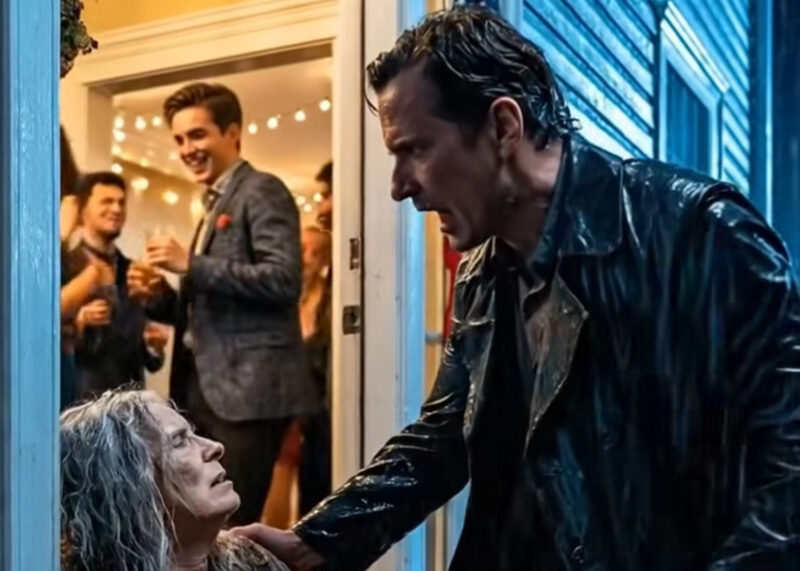
The backyard where Medelli and I once played.
I felt sad.
But I didn’t regret my decision.
Then, in late March, my phone rang at two in the morning.
It was Medelli.
She was crying.
“Kyle left,” she whispered.
I sat upright.
“What happened?”
“He emptied our joint accounts. There are credit card debts I didn’t know about. I can’t afford the rent.”
I listened quietly.
“Mom and Dad can’t take me in,” she continued. “Their new apartment is too small.”
Then came the request I’d expected.
“Please, Odalie. I have a baby. Can Oliver and I stay with you?”
I looked toward Ben, who was awake beside me.
For a moment, I imagined opening our guest room.
Helping her unpack.
Paying for groceries.
Taking responsibility for another family crisis.
Then I remembered everything that had happened.
“Medelli, I’m sorry you’re going through this,” I said gently. “I can help you find legal assistance and emergency housing resources.”
“I don’t want emergency housing! I want to stay with my sister!”
“My home isn’t available.”
“Why are you still punishing me?”
“I’m not punishing you. I’m protecting my family.”
She began crying harder.
“You have an empty guest room!”
“And Ben and I decide how it’s used.”
She called me selfish.
Then she ended the call.
I placed my phone on the nightstand.
Ben wrapped his arm around me.
For once, I didn’t rush to solve a problem that wasn’t mine to solve.
Two years later, my life looked completely different.
Eleanor was a happy toddler.
Our home was peaceful.
Ben and I had built a reliable support system.
My parents were living in a smaller apartment.
Medelli had found work managing a boutique and was supporting herself and Oliver.
It wasn’t an easy life for her.
But she was managing without my money.
As for me, I’d been offered an exciting professional opportunity.
My research organization wanted me to lead a short-term atmospheric data collection assignment at McMurdo Station.
It was an important career milestone.
Ben and I discussed the arrangements carefully.
With help from family, our nanny Rachel, and Gloria, we made sure Eleanor would be well cared for while I was away.
I accepted.
When I stepped off the transport aircraft in Antarctica, freezing air swept across the runway.
The familiar landscape stretched endlessly beneath a bright blue sky.
After everything I’d experienced, returning to the ice felt strangely comforting.
During my second week, I received an unexpected email.
It was from Dad.
He explained that Mom had been struggling with her health.
Medelli was still having financial difficulties.
Then he asked whether my recent promotion might allow me to resume the $1,200 payments for six months.
I stared at the message.
Six months.
The same promise I’d heard so many times.
Just help us until things improve.
Just one more payment.
Just one more emergency.
In the past, I would have immediately started calculating how much I could send.
This time, I felt calm.
I typed a short reply.
Dad, I’m sorry to hear Mom hasn’t been well. I hope she’s receiving the care and support she needs. My decision to stop financial assistance remains unchanged. Please don’t contact me about money again.
I pressed send.
Then I closed my laptop.
Outside, the Antarctic landscape shimmered beneath the afternoon light.
I thought about Ben.
About Eleanor.
About the beautiful home waiting for me thousands of miles away.
For years, I’d believed being a good daughter meant always saying yes.
Yes to another loan.
Yes to another emergency.
Yes to putting my own needs last.
But becoming a mother had taught me something my family never had.
Love doesn’t require someone to surrender every boundary.
And independence doesn’t mean a person deserves less kindness.
I’d survived the freezing temperatures of Antarctica.
I’d worked through exhausting storms and months of isolation.
Yet the loneliest moment of my life had happened in a warm hospital room, only two doors away from the people I’d hoped would come see me.
The coldest place I’d ever known wasn’t Antarctica. It was a maternity ward where my parents celebrated one daughter while pretending the other didn’t need them.
But that chapter of my life was over.
Now I was building a different future.
One where my daughter would never have to earn love through sacrifice.
One where generosity was a choice, not a family obligation.
And one where my worth wasn’t measured by how much money I could provide.
I looked out across the endless white landscape and smiled.
For the first time, I wasn’t running from the cold.
I’d finally learned how to leave it behind.
The end.