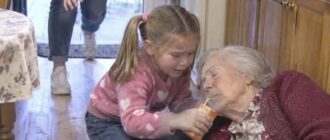
My 17-year-old daughter was told by her dad that he couldn’t afford a prom dress this year. But that same evening, he proudly shared a picture of his stepdaughter wearing a $600 gown. Instead of confronting him, I called his mother, who personally took our girl shopping in Sioux Falls.
Part 1 of 3
Part 1: The Photograph Nobody Meant to Explain
Bree was sitting at the kitchen table when her father called.
It was a Tuesday in March, and her bowl of chili was getting cold.
As usual, she put the call on speakerphone.
“Sweetheart, I can’t afford a prom dress this year. Welding work has been slow since Christmas.”
“It’s okay, Dad,” she answered.
She repeated it.
Afterward, she washed her bowl and went upstairs.
At 9:40 that evening, Wyatt’s wife, Kendra, uploaded a photograph.
Her daughter Reese, also seventeen, was wearing a $600 dress purchased in Sioux Falls.
Wyatt had left a comment beneath it.
“Beautiful girl. So proud.”
A moment later, I heard Bree quietly close her bedroom door.
I didn’t call Wyatt.
We’d been divorced for eleven years, and I knew exactly how those conversations ended.
He was responsible for being Bree’s father. I couldn’t force him to do better.
But there was someone else who loved her deeply.
I picked up the phone and called his mother.
Opal Halvorsen was seventy-two.
She’d worked as a hairstylist in Howard for forty-one years.
She’d remembered every one of Bree’s birthdays, even during the terrible ice storm.
I explained what happened without adding my opinion.
Opal remained silent for several moments.
“Is Bree crying?”
“Not that I can hear.”
“Saturday,” she finally said. “I’ll be there at eight. You’re coming with us.”
That weekend, Opal drove the forty minutes to Sioux Falls herself.
She refused to accept gas money.
The dress shop was filled with racks of gowns, with sunshine streaming through the front windows.
Bree tried on six dresses.
Before looking in the mirror, she always checked the price.
Eventually, Opal removed the price tags from the hangers and slipped them into her purse.
“Today, Grandma worries about the cost. Your only job is choosing a dress.”
The seventh gown was emerald green.
Bree stood on the little circular platform before the three-panel mirror.
She couldn’t find a word to say.
Opal sat nearby, smiling with her purse in her lap.
I stood behind her in my gray cardigan, quietly watching.
This moment belonged to them.
“Oh, sweetheart,” Opal whispered. “That’s the one.”
Bree turned to examine the back.
Then her gaze dropped.
“Grandma, Dad told me he couldn’t pay for one.”
“I heard what he told you.”
“I don’t want you being angry with him.”
Opal placed her purse beside the chair.
“I’m not upset with anyone. I’m simply buying my granddaughter her prom dress.”
It cost $389.
At the glass register counter, Opal slowly counted out the cash.
Outside, she photographed Bree holding the dress in its garment bag.
Then she climbed behind the steering wheel and spent several minutes typing something with one finger.
I didn’t question her.
She published the post before we even reached the interstate.
Eleven minutes later, my phone rang.
It was Wyatt.
He never contacted me unless we needed to discuss a weekend with Bree.
That had been our arrangement for eleven years.
From the back seat, Bree noticed her father’s name on my screen.
She immediately went silent and motionless.
I picked up.
Wyatt skipped the greeting.
“Lorna. Have you seen what my mother just put online?”
——-
I glanced at Opal.
She kept both hands on the steering wheel, looking straight ahead.
“No.”
“You haven’t?”
“No, Wyatt.”
A pause followed.
Then he gave the short exhale I’d heard a thousand times during our marriage, the one that meant he was trying to organize his frustration before giving it to somebody else.
“She posted the picture from the dress shop.”
“Okay.”
“And she wrote something with it.”
Beside me, Opal’s mouth tightened almost imperceptibly.
I turned around.
Bree had lowered her eyes to her phone but wasn’t looking at the screen.
“What did she write?” I asked.
Wyatt hesitated.
That was when I knew the post probably wasn’t the public scolding he’d imagined.
“If people you love are made to feel like an expense,” he read, “remind them that being cherished has never been about a price tag.”
The car seemed to become quieter around us.
That sounded like Opal.
Simple. Direct. No names.
Wyatt continued.
“Then she wrote, ‘Prom shopping with my granddaughter. Emerald was always her color.’”
I looked at Opal.
She shrugged.
“That’s it?” I asked.
“People know.”
“Know what?”
“What she means.”
“Do they?”
“Come on, Lorna.”
Opal changed lanes smoothly.
A truck passed us going the opposite direction, rocking the car slightly.
I heard Bree move in the back seat.
“Mom,” she said.
I turned.
“Can I talk to Dad?”
Every instinct in me wanted to say no.
Not because I wanted to keep her from him.
Because I knew her.
Bree had spent years becoming small whenever adults became uncomfortable.
She apologized when other people bumped into her grocery cart. She said “I’m fine” before anyone asked. When Wyatt cancelled weekends, she found explanations for him faster than he found excuses for himself.
But she was seventeen.
And the expression on her face was different now.
Not angry.
Ready.
I took Wyatt off speaker and handed the phone back.
She immediately put it on speaker again.
“Dad?”
His voice changed.
“Hey, sweetheart.”
“You don’t need to be mad at Grandma.”
“I’m not mad.”
Even Opal looked at me.
Bree apparently noticed too.
“Dad.”
Another silence.
“Okay,” Wyatt said. “I’m frustrated.”
“Because she bought me a dress?”
“No. Of course not.”
“Because she posted about it?”
“It’s complicated.”
Bree looked out the window.
The fields along Interstate 90 were still brown from winter, broken by thin patches of old snow beneath the fences.
“I saw Reese’s dress,” she said.
Wyatt didn’t answer.
“I saw Kendra’s picture Tuesday night.”
Still nothing.
Bree’s fingers closed around the edge of her phone.
“I don’t care that Reese got a nice dress.”
“Bree—”
“I mean it. She’s my stepsister. She’s allowed to have things.”
“I know.”
“But you called me and said you couldn’t afford mine.”
Wyatt finally spoke.
“There’s more to it than that.”
“Then tell me.”
His reply came too quickly.
“Not while you’re in the car with your mom and Grandma.”
That sentence changed something.
I felt it before I understood it.
Opal did too.
Her eyes flicked toward me.
Bree sat straighter.
“What does that mean?”
“Nothing.”
“Dad.”
“I just don’t want this becoming a courtroom.”
Home Stories My 17-year-old daughter was told by her dad that he couldn’t afford a prom dress this year. But that same evening, he proudly shared a picture of his stepdaughter wearing a $600 gown. Instead of confronting him, I called his mother, who personally took our girl shopping in Sioux Falls.
Part 2 of 3
I stared at the windshield.
Eleven years divorced, and somehow Wyatt could still transport me instantly back to our old kitchen, where every disagreement became a referendum on how unfairly the world treated him.
I didn’t answer.
Neither did Opal.
Bree did.
“Nobody is saying anything.”
“I know, sweetheart.”
“So explain.”
Wyatt sighed.
“Reese’s dress wasn’t paid for the way you think.”
Bree frowned.
“What way do I think?”
“Kendra bought it months ago.”
“The post said you guys got it in Sioux Falls last weekend.”
“She picked it up last weekend.”
“So you didn’t pay for it?”
“No.”
The relief on Bree’s face appeared before she could stop it.
It hurt to see.
Because that was all she wanted.
An explanation that made her father innocent.
“Okay,” she whispered.
Then Wyatt added, “I helped.”
Her expression disappeared again.
“How much?”
“Bree, this isn’t—”
“How much?”
“Two hundred.”
Opal’s grip tightened on the steering wheel.
Bree stared at her phone.
“You couldn’t help with mine?”
“I told you. Work has been slow.”
“But you had two hundred dollars.”
“That was different.”
“Why?”
There it was.
One word.
No accusation.
No raised voice.
Just a daughter asking her father why another girl’s dress had been different.
Wyatt didn’t have an answer ready.
When he finally spoke, his voice had lost its irritation.
“Reese has been having a hard year.”
Bree’s face changed.
Not dramatically.
If I hadn’t been watching her closely, I might have missed it.
Her shoulders lowered.
“Oh.”
Wyatt continued.
“There have been some things going on.”
“What things?”
“Things I’m not going to discuss because they’re private.”
Bree nodded automatically, though he couldn’t see her.
“Okay.”
“And when Kendra asked if I’d help, I did.”
Bree looked down.
“I understand.”
I wanted to turn around and tell her she didn’t have to understand everything.
That sometimes understanding another person’s reason didn’t erase the wound.
Instead, Opal spoke.
“Wyatt.”
He went silent.
His mother hadn’t said a word since the call began.
“Dad?” Bree asked.
“I’m here.”
Opal’s tone remained calm.
“Reese having a difficult year explains why you helped Reese. It doesn’t explain why you told Bree you couldn’t help her.”
“Mom.”
“You could have said, ‘I only have fifty dollars.’ You could have said, ‘Can we find something secondhand?’ You could have said, ‘Give me until April.’ Instead you told her the matter was closed.”
“We’re not doing this.”
“No,” Opal said. “I’m not doing anything. I’m driving.”
Bree almost smiled.
Almost.
Wyatt lowered his voice.
“You know what? Bree and I can talk when she’s home.”
“That’s fine,” I said.
“I wasn’t talking to you, Lorna.”
“I know.”
Opal’s eyebrows lifted.
Bree looked between us.
Then she said something I hadn’t expected.
“Dad, did you even know what color I wanted?”
The question landed differently from all the others.
Wyatt didn’t respond.
Bree waited.
Outside, a flock of blackbirds lifted from a field all at once.
“Green,” he eventually said.
Bree’s mouth parted.
For a second, I thought he had saved himself.
Then Wyatt added, “Right?”
Bree looked toward the garment bag lying beside her.
“Yeah.”
Her voice softened.
“Emerald green.”
“I remembered.”
Something eased.
Then Opal spoke so quietly that I almost didn’t hear her.
“No, you didn’t.”
Every head in the car turned toward her.
Even though Wyatt couldn’t see.
Opal’s eyes remained on the road.
“What?” he asked.
“She told you last Thanksgiving.”
“Mom, what are you talking about?”
“You said blue.”
Silence.
Opal continued driving.
“I heard you tell Kendra in January that Bree wanted a dark blue dress.”
My stomach tightened.
“Maybe he mixed it up,” I said, because suddenly I was the one trying to lower the temperature.
Opal didn’t answer me.
Wyatt did.
“Exactly.”
But Bree was no longer listening to him.
She was watching her grandmother.
“Grandma?”
Opal’s expression had changed.
Only slightly.
But enough.
“What?”
“How did you know I wanted emerald?”
Opal smiled.
“You showed me one at Christmas.”
“No.”
The smile faded.
Bree leaned forward.
“I didn’t.”
Opal glanced into the rearview mirror.
Bree continued.
“I didn’t decide on green until February.”
The sound of tires against pavement seemed louder.
Opal swallowed.
“Then I must have remembered wrong.”
Bree stared at her.
I knew that stare.
It was the same look she’d had as a little girl when she realized adults sometimes pretended not to know things.
“Grandma,” she said slowly, “why did you already know what color dress I wanted?”
Opal didn’t answer.
My phone was still connected to Wyatt.
And his voice suddenly came through the speaker.
“Mom.”
There was something in it I hadn’t heard before.
Alarm.
Opal’s eyes closed for half a second.
“Don’t,” she said.
Bree looked between the phone and her grandmother.
“Dad?”
Wyatt said nothing.
“What’s going on?”
Nobody answered.
Home Stories My 17-year-old daughter was told by her dad that he couldn’t afford a prom dress this year. But that same evening, he proudly shared a picture of his stepdaughter wearing a $600 gown. Instead of confronting him, I called his mother, who personally took our girl shopping in Sioux Falls.
Part 3 of 3
We passed the exit for Hartford.
Opal drove another mile.
Then another.
Finally, she signaled, pulled onto the shoulder, and stopped.
Cars rushed past us.
She put the vehicle in park.
For the first time all day, Opal looked old.
Not seventy-two.
Older somehow.
Tired in a place that had nothing to do with years.
She turned in her seat until she could see Bree.
“There is something I need to tell you.”
Wyatt’s voice exploded through the phone.
“Mom, no.”
Opal flinched.
Bree did not.
She reached forward and took the phone from between the seats.
“Dad.”
“Bree, sweetheart, listen to me.”
“No.”
It was the first time I had ever heard my daughter say that word to him without immediately softening it.
“No. Grandma gets to talk.”
Wyatt went silent.
Opal’s eyes filled.
“Two months ago,” she said, “your father came to my house.”
Bree waited.
“He asked me for money.”
“For work?”
“No.”
“For what?”
Opal looked briefly at me.
I knew instantly that whatever came next had nothing to do with dresses.
“He asked me for four thousand dollars.”
My breath caught.
Bree’s forehead creased.
“Why?”
“He said he needed to fix something before you found out.”
The phone went dead.
Wyatt had ended the call.
Bree stared at the blank screen.
Then she looked at her grandmother.
“What did Dad not want me to find out?”
Opal’s answer came barely above a whisper.
“I don’t know, sweetheart.”
She reached into her purse.
“But I think this might tell us.”
From an inside pocket, she removed a white envelope.
Bree’s name was written across the front.
Not in Opal’s handwriting.
In Wyatt’s.
And beneath it were four words.
For Bree. When she’s eighteen.
Part 2: What Opal Had Been Protecting
For nearly a minute, nobody touched the envelope.
Cars kept passing on the interstate, each one sending a faint shudder through Opal’s Buick.
“Why do you have that?” Bree asked.
“Your father left it at my house. January nineteenth. He said if anything changed before your eighteenth birthday, I was to make sure you got it. He wouldn’t say what ‘changed’ meant.”
That was Wyatt. He could make vagueness sound like responsibility.
“You don’t have to open that right now,” I said.
“I’m going to.”
She slid a finger under the flap. Inside were three sheets of paper. The first was folded around a cashier’s check for $3,800, made out to Bree Marie Halvorsen.
Bree unfolded Wyatt’s note. She read it, then handed it to me.
Bree, this money belongs to you. It always did. I should have fixed this years ago. By the time you read this, I hope I have. Dad.
“Money from where?” she asked.
The second sheet was a photocopied bank statement. Seven years earlier, Wyatt’s account had received a $4,000 deposit. The memo line read: Bree Halvorsen – Education Gift.
I closed my eyes. I had forgotten it existed.
When Bree was ten, my great-uncle Floyd had sold a piece of land near Mitchell. He had no children, so he gave each grandniece and grandnephew four thousand dollars for college. Floyd had handed Bree’s share to Wyatt at a family Christmas, because Wyatt told him he’d already opened a savings account in her name. We’d been divorced four years by then. I had believed him.
“That money was for college,” I whispered.
The statement showed what happened next. Within five months, the balance had fallen below three hundred dollars. There were no college-account transfers, only a tire shop, a lumber yard, utility bills and a cash withdrawal.
“Did Dad steal it?” Bree asked.
Opal flinched. I chose my words carefully. “He used money that had been given for you.”
“That’s stealing.”
Nobody corrected her.
“He came to my house in January,” Opal said, “and told me he’d made a mistake years ago. He asked me for four thousand dollars to put something back where it belonged. I told him I’d give you four thousand anytime you needed it, but I wouldn’t hand it to him without knowing why.”
“So he found it somewhere else,” Bree said.
“I thought so. Until this minute.”
Two days later, Reese texted Bree: Can we talk?
Bree met her at a coffee shop near school, alone. When she came home, she sat in the car for several minutes before coming in. I went out and sat beside her.
“Reese knew some of it,” she said. In January, Kendra and Wyatt had been saving for a new roof, nearly six thousand dollars. Wyatt had withdrawn four thousand without telling her. When Kendra found out, they had a terrible fight, and he admitted he’d used the money to repay something he took from Bree years ago.
“Reese thought her mom was upset because Dad gave me four thousand dollars,” Bree said. “She didn’t know it was already mine.”
“How is she?”
“Embarrassed. She offered to give back the two hundred Dad paid toward her dress.” Bree wiped under one eye. “I told her no. She didn’t do anything. I told her I like her dress. She started crying.”
That evening, Wyatt called. Bree took it in the backyard and came back twenty minutes later with dry eyes.
“He apologized. It wasn’t a very good apology. He kept explaining. His truck was broken, he was behind on rent, he thought he’d replace it in two months.” She sat at the table. “He said every year afterward it got harder to admit.”
“How do you feel?”
She thought. “I always thought Dad forgot things because I wasn’t important enough. Now I think sometimes he remembers everything, and remembering makes him avoid me.”
A week later, Bree came home from school holding a folded piece of notebook paper. It was from Kendra.
Your father did not tell you the whole truth about the four thousand dollars. Neither did your grandmother. Ask Opal what happened on January nineteenth after Wyatt left her house.
“Why does everybody keep deciding what I’m old enough to know?” Bree asked.
I had no answer. She stood up. “I’m going to Grandma’s.”
Opal opened the door before we knocked. “I suppose Kendra talked to you.”
Her house smelled of coffee and the lavender spray she’d used in her salon for decades. The walls were covered in photographs, and Bree appeared in more of them than anyone: kindergarten, a missing front tooth, blue cotton candy at the county fair. That house had always been proof that somebody was paying attention. It made what came next harder.
“What happened after Dad left?” Bree asked.
“I refused him the money,” Opal said. “Then I called my bank.” She took an accordion folder from a hallway drawer and pulled out a statement. “That afternoon, I withdrew four thousand dollars.”
“You said you didn’t give Dad the money.”
“I didn’t. I bought the cashier’s check, payable to you.”
Bree stared. “But Dad wrote the note.”
“He begged me to let him tell you himself. He wanted a chance to make it right. So I let him put his name on it.”
“So the money was yours. And he let me think he’d fixed it on his own.”
“Yes.”
Bree stood and walked to the window. “And you helped him hide it.”
“Yes.” There was no excuse in it. “I thought I was protecting your relationship with your father. I was protecting my son from the consequences of telling his daughter the truth. I was wrong.”
Adults rarely told children they were wrong without a reason attached that watered the admission down. Opal didn’t attach one. Bree’s anger didn’t vanish, but her shoulders came down.
“Then why couldn’t he buy me a dress?” she asked.
“I think your father was afraid to spend anything on you,” Opal said. “Helping Reese was easy. Helping you made him think about what he’d taken.”
“So avoiding me was easier.”
“I think so.”
“That’s worse.”
“Yes,” Opal said. “It is.”
The story had stopped being about money. Wyatt hadn’t valued Reese more. He could show up for Reese because she didn’t remind him of his worst mistake. It was unfair in a different way, but at least it was true.
Part 3: The Box from Eleven Years Ago
The next week, Bree asked her father to meet her at Falls Park in Sioux Falls. Neutral ground. I drove her and stayed in the car. From a distance I watched them on a bench by the river. Wyatt looked older than I remembered, his hands clasped between his knees.
“I told him I wasn’t asking him to be perfect,” Bree said afterward. “I asked him to stop deciding what truth I could handle.”
“And?”
“He cried.”
The night before prom, Reese came over carrying a shoe box. “My shoes hate me.” Within twenty minutes the two of them sat on the living-room floor comparing blister pads and earrings. Watching them, I felt embarrassed by how easily adults turn children into representatives of conflicts they never chose. Reese wasn’t the girl with the six-hundred-dollar dress. Bree wasn’t the neglected daughter. They were seventeen, and they both hated false eyelashes.
At the door, Reese said, “My mom told Wyatt maybe he shouldn’t come tomorrow. She thinks you won’t want him there.”
“That’s not her decision,” Bree said. That night, at 11:13, she showed me a text before sending it: Pictures are at 5:00 at Grandma’s. You can come. But don’t pretend everything is fixed. Just come.
Wyatt answered in six minutes: Okay. There’s something else I should tell you first. I have something of yours. I’ve had it for eleven years.
He arrived at Opal’s forty minutes before pictures, carrying a battered cardboard box. Bree’s hair was half curled, one side loose around her shoulder. Opal had turned the dining room into a dressing station with curling irons and three cans of hairspray.
“What’s inside?” Bree asked.
“Letters.” Wyatt opened the box. Dozens of envelopes, some with stickers, some on construction paper, some folded into tiny books. “When we divorced, you wrote notes to whichever parent you weren’t with. I kept the ones you gave me.”
I remembered those notes. I miss you. We got pancakes. Mom says my tooth will come out soon.
“There are more,” he said. “Whenever I cancelled a weekend, I wrote you a letter afterward.”
“Instead of calling me?”
“Writing was easier than hearing you disappointed.” He handed her a sealed envelope dated seven years earlier. Bree read it, and her face crumpled before the bottom of the page. She passed it to me.
Bree Bug, I did something today I hope you never know about, because I intend to fix it before you ever need to. That’s a cowardly sentence. The truth is I used the money Uncle Floyd gave you. My truck is broken and I’m two months behind on rent. You’re ten years old and you trust me completely, and I don’t know why that makes it feel worse. Someday, if I give you this letter, it will mean I finally learned how to tell you the truth. Dad.
“You knew it was wrong,” Bree said.
“Yes.”
“And you did it anyway.”
“Yes.” His answers were simple now. Maybe he’d learned that explanations are not accountability. “Everyone keeps cleaning up after me. Your grandmother was right. You don’t need me to protect you from the truth about me.”
For the first time that day, Bree looked at him without anger. It wasn’t forgiveness. It meant she believed the sentence.
Then the doorbell rang and the house filled with friends, garment bags and a missing earring. Bree went upstairs and came back in the emerald gown. Every person in the room stopped talking. Wyatt stood, his eyes full, and said nothing, which was perhaps the best decision he made all day.
In the photographs, Bree stood with me, with Opal, with Reese in silver. Wyatt hovered by the porch railing until Bree said, “Come here.” Under the maple tree he put an arm around her. She stiffened, and he lowered it. Then she took his hand. The camera clicked. The picture was imperfect. So were they.
After prom, Opal and I sat on the porch. “You think they’ll be okay?”
“I don’t know,” I said, and smiled when she looked surprised. “That’s not pessimism. Maybe they’re finally going to have a real relationship instead of one built around pretending.”
“I’ll take it,” Opal said.
Nothing was fixed. That was the surprising part. Opal was still owed thirty-eight hundred dollars. Kendra and Wyatt had hard conversations ahead. Bree still carried eleven years of small disappointments that one good spring couldn’t erase. But not fixed was not the same as hopeless. Sometimes repair was simply the decision to stop hiding the crack.
Bree put the cashier’s check in savings. “But I want Dad to pay Grandma back,” she said. “Not because Grandma needs it. Because he does.” Wyatt made a repayment schedule, a hundred dollars every payday. “He made a spreadsheet,” Bree told me, laughing. Opal’s only comment was that the first payment had better clear.
In June, we all sat in a row at Bree’s graduation: Wyatt, Kendra, Reese, Opal with a purse saving seats, and me. When Bree’s name was called, we stood and embarrassed her terribly, and she loved it. In the group photograph she reached backward and said, “Mom, closer.” Not one perfect family, exactly. A collection of people connected by mistakes, marriages, divorces and the stubborn decision to keep showing up. Bree stood in the center, and nobody was asking her to be smaller so the adults could stay comfortable.
Before she left for college, she took the emerald dress to Opal’s salon. “You said you wanted to start a prom closet,” she told her grandmother. “Now you are. I want somebody else to wear it.”
Opal hung a rack in the front window with a handwritten sign: PROM CLOSET. TAKE WHAT MAKES YOU FEEL BEAUTIFUL. RETURN IT IF YOU CAN. PASS IT ON IF YOU CAN’T. The emerald gown was the first dress on it. By the following spring there were twenty-three more.
On prom weekend, a mother drove forty miles with her daughter to Howard because they’d heard there were free dresses. The girl tried on four. The fifth was emerald green. She came out of the changing room pressing her hands to the skirt, and her mother covered her mouth.
“How much is this one?” the girl whispered.
Opal smiled from the reception desk. “Today, sweetheart, your only job is choosing a dress.”
On Tuesdays now, Wyatt called Bree at college. Sometimes he forgot. When he did, she no longer invented excuses for him. She texted: You forgot. And he answered: I did. I’m sorry. Can I call now?
It wasn’t extraordinary. That was why it mattered.
On my refrigerator, under the graduation photograph, I keep one of Opal’s flyers. At the bottom, in green ink, Bree added a line the last time she was home:
Everybody deserves one day when they don’t have to check the price before looking in the mirror.
I never asked her to explain it. Some things don’t need explaining.
THE END