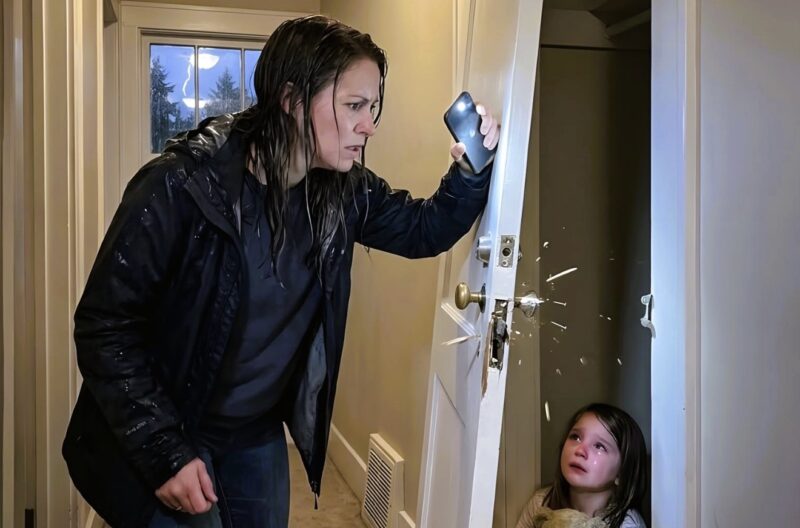
My six-year-old niece called me at 12:17 in the morning and whispered five words that changed the way I saw my family forever. “Aunt Natalie, please help me.” Her voice was so faint that I sat straight up in bed before I was fully awake.

There was a pause on the line, followed by a shaky breath. “They locked me in. I’m really hungry. I’m scared.” Then the call went silent.
For one second, I stared at the phone in my hand, waiting for her name to light up again. It did not.
I called back immediately.
The call rang until it disconnected.
I tried a second time, then a third.
Nothing.
Beside me, my husband Adam pushed himself up against the headboard and squinted at the clock.
“What happened?”
“Lizzy called.”
My voice sounded strangely calm, even to me.
“She said they locked her in.”
Adam was awake now.
“Locked her in where?”
“She didn’t say.”
“Could you have misunderstood her?”
“No.”
I threw back the covers and pulled on jeans, a sweatshirt, and the first jacket I could reach.
“I know her voice.”
Lizzy was my brother Ian’s daughter.
Ian was away receiving treatment, and while he was gone, my parents, Gloria and Walt, had been given guardianship of her.
They received monthly care checks and told everyone in the family that Lizzy was doing well.
My mother posted cheerful updates and repeated the same explanation whenever anyone noticed that Lizzy seemed tired or thin.
“She’s delicate,” Gloria would say.
My father always backed her up.
“She’s picky. We know how to raise a kid.”
They delivered those lines with the confidence of people who expected to be believed.
Until that night, I had believed them more often than I wanted to admit.
I grabbed my keys and headed downstairs.
Adam followed me into the kitchen.
“I’m coming with you.”
“Stay here in case she calls again.”
“Natalie—”
“I need you watching the phone.”
He studied my face for a moment, then nodded.
“Call me the second you get there.”
Rain hammered the windshield as I backed out of the driveway.
The roads were nearly empty, and the wipers moved at full speed without clearing the glass for more than a second at a time.
Locked in.
Hungry.
Scared.
The words followed me through every intersection.
I wanted to believe there was an explanation that would make the call less terrible.
Maybe Lizzy had hidden somewhere after being punished.
Maybe a door had jammed.
Maybe she had used the word “locked” because she was frightened and six years old.
But she had said, “They locked me in.”
Not “The door won’t open.”
Not “I can’t get out.”
They locked me in.
I gripped the steering wheel harder.
The last few times I had visited, Lizzy had seemed quieter than usual.
She used to run toward me as soon as I walked through the front door, carrying her stuffed bear under one arm and talking so quickly that half her words collided.
Lately, she had stayed near the stairs and watched my mother before answering even simple questions.
Her sleeves had covered most of her hands.
Her clothes had hung loosely around her shoulders.
Once, when Gloria went into the kitchen, Lizzy leaned close to me and whispered, “Aunt Nat, I want to live with you.”
Before I could ask why, my mother returned carrying coffee.
“She makes up stories,” Gloria said, as though she had heard every word.
Then she smiled and changed the subject.
At the time, I had told myself that children sometimes wanted to move in with relatives who seemed more fun.
I had told myself Ian would be home when he was ready.
I had told myself my parents were strict, old-fashioned, and difficult—but not dangerous.
The excuses felt uglier with every mile.
My parents’ house was completely dark when I pulled into the driveway.
There was no porch light, no glow from the television, and no movement behind the curtains.
I parked crooked, left the headlights on, and ran through the rain.
I pounded on the front door.
“Mom!”
No answer.
“Dad!”
I knocked harder.
“Open the door! Where is Lizzy?”
The house remained silent.
I called my mother’s phone while standing on the porch.
I heard nothing ringing inside.
My father did not answer either.
I stepped back and looked toward the upstairs windows.
All of them were dark.
The rain had soaked through my jacket by the time I started circling the house.
I tried the back door, then two windows near the kitchen.
Everything was locked.
At the side entrance, I pressed my face close to the glass and shined my phone light through the pane.
The narrow hallway beyond it was empty.
I called Lizzy’s name again.
Nothing.
My hands were shaking, but my thinking had become very clear.
A six-year-old had called me from inside that house and asked for help.
I was not going to stand outside waiting for permission.
I ran back to my car, grabbed a tool, and returned to the side entrance.
The glass cracked on the first strike and broke enough on the second for me to clear a space near the lock.
I covered my hand with my sleeve, reached through, and turned the latch.
The door opened into air that smelled damp, stale, and strangely cold.
“Lizzy?”
My voice echoed through the hallway.
“It’s Auntie. I’m here.”
I turned on my phone flashlight and moved through the living room.
Family photographs covered one wall.
In every frame, Gloria and Walt looked like devoted grandparents.
There were pictures of birthday cakes, church clothes, holiday dinners, and Lizzy sitting between them with her stuffed bear in her lap.
Anyone looking at that wall would have thought she was safe.
I called Adam and kept the phone against my ear as I searched.
“I’m inside,” I told him.
“Are they there?”
“I don’t know.”
“Do you see Lizzy?”
“Not yet.”
“Natalie, keep me on the line.”
I moved toward the stairs.
At first, all I could hear was thunder and water dripping from my clothes onto the floor.
Then a sound came from upstairs.
It was so quiet that I almost missed it.
A small, broken sob.
“Lizzy?”
The sound stopped.
I climbed the stairs and swept the light across the hallway.
Three bedroom doors stood open.
At the far end was a storage closet with a latch fastened on the outside.
I felt something inside me go still.
“Lizzy?”
For a moment, there was no response.
Then a tiny voice came through the door.
“Auntie?”
“I’m here.”
I pulled at the latch, but it would not release.
The metal looked bent, as though it had been forced into place.
“Move away from the door, sweetheart.”
I waited until she told me she had moved.
Then I hit the door with my shoulder.
The frame shuddered, but the latch held.
I hit it again.
Pain shot down my arm.
On the third strike, the screws tore loose and the door swung inward.
My flashlight found Lizzy curled on the floor beneath a hanging coat.
She was clutching her stuffed bear against her chest.
An empty bottle lay beside her.
Her hair was tangled, her lips looked dry, and her face had the exhausted stillness of a child who had cried until she had nothing left.
“Auntie,” she whispered. “You came.”
I dropped to my knees.
The anger that had carried me into the house disappeared beneath something colder and more useful.
Lizzy needed warmth.
She needed water.
She needed a doctor.
Everything else could wait.
I lifted her carefully.
She felt far too light for a six-year-old.
Her arms tightened around my neck, but even that small movement seemed to exhaust her.
“How long were you in here?” I asked.
“I don’t know.”
“Where are Grandma and Grandpa?”
“They went out.”
“Did they give you anything to eat?”
She pressed her face against my shoulder.
“They said I was bad.”
I closed my eyes for half a second.
Adam’s voice came sharply through the phone.
“Natalie, what’s happening?”
“I found her.”
“Is she okay?”
“No.”
I wrapped my jacket around Lizzy and carried her downstairs.
When we passed the living room, she turned her face away from the photographs.
At the broken side door, she began trembling.
“Don’t take me back,” she whispered.
I held her closer.
“No one is taking you back tonight.”
She looked up at me as though she needed to see whether I meant it.
“We’re getting you help,” I said.
The hospital staff moved quickly when they saw her.
A nurse brought a wheelchair, but Lizzy would not release my hand, so I walked beside her while she was taken into an examination room.
Bright lights replaced the darkness of the closet.
A warm blanket replaced my wet jacket.
Someone gave her small amounts of water while another staff member checked her vital signs.
Her stuffed bear stayed tucked against her side.
The doctor’s expression changed during the examination.
It was not dramatic.
That made it worse.
She became quieter, more precise, and more careful with every question.
Finally, she turned toward me.
“She is severely dehydrated, and she is not getting the nutrition she needs,” the doctor said. “She needs to stay here while we evaluate everything.”
I looked at Lizzy on the bed.
A hospital band circled her tiny wrist.
Her fingers rested on the bear’s worn ear.
Yesterday, I had accepted every excuse my parents offered.
She’s delicate.
She’s picky.
She’s fine.
Now those words sounded like locks.
Adam arrived carrying dry clothes and a paper cup of coffee I never touched.
He stopped in the doorway when he saw Lizzy.
His face tightened, but he kept his voice gentle.
“Hey, kiddo.”
Lizzy gave him a tired little nod.
He placed the coffee on the counter and stood beside me.
“Where are your parents?” he asked quietly.
“I don’t know.”
“Have they called?”
“No.”
That absence told me almost as much as the closet had.
If Gloria and Walt had come home and found a broken door and a missing child, they should have been frantic.
They should have called me, the hospital, or anyone who might know where Lizzy was.
Instead, there was silence.
I knew how my parents handled accusations.
My mother cried first.
My father became offended.
Then they joined together and retold the story until the person confronting them sounded unstable, cruel, or ungrateful.
They would say I had misunderstood.
They would claim Lizzy had locked herself in.
They would point to the broken glass and say I was reckless.
They would describe the closet as a harmless punishment, if they admitted she had been there at all.
If I approached them with nothing but rage, they could turn the argument toward my behavior.
Lizzy could become an afterthought.
Worse, someone might eventually accept their performance and send her back.
I could not let that happen.
So while Adam stayed beside Lizzy’s bed, I returned to the house.
I did not return as Gloria and Walt’s daughter.
I returned as someone collecting the truth.
The rain had slowed, but water still ran along the curb when I pulled into the driveway again.
The house remained dark.
Inside, the family photographs looked different.
Their smiles no longer suggested warmth.
They looked arranged.
I began with the kitchen because my mother kept bills, receipts, and bank envelopes in a drawer near the refrigerator.
The drawer was crammed with unopened mail, folded statements, store receipts, and envelopes with handwritten notes across the front.
I laid everything on the table and photographed each page before touching the next.
It did not take long to find the care deposits.
They arrived regularly.
The amounts were clearly marked, and the timing matched the months my parents had been responsible for Lizzy.
Then I found the withdrawals.
Restaurants.
Electronics.
Trips.
New purchases for my mother.
There were repeated charges that had nothing to do with food, clothing, school supplies, or caring for a child.
I searched for grocery receipts large enough to support three people.
I found almost none.
I searched for children’s clothing, school materials, medicine, or anything that suggested Lizzy had benefited from those deposits.
There was very little.
Shopping bags sat in a corner near the laundry room, still holding tissue paper and empty boxes.
Receipts had been shoved inside them.
I photographed those too.
One purchase had been made only days after my mother told me she could not afford to replace Lizzy’s worn shoes.
Another was from the same week Lizzy had asked whether she could take leftovers home from my house.
At the time, Gloria had laughed and said the child was going through a phase.
Standing in that kitchen, I understood that the pattern had been visible for months.
I had simply viewed each warning separately because the full picture was too painful to accept.
The loose clothes.
The missed visits.
The constant explanations.
The way Lizzy watched Gloria before speaking.
The request to live with me.
The midnight call.
The outside latch.
The empty bottle.
The care deposits.
The withdrawals.
None of it was separate anymore.
I stayed until the sky began turning gray.
By morning, I contacted Lizzy’s school and asked about her attendance.
The response came quickly.
She had missed nearly every day she was supposed to attend.
There had been excuses, vague explanations, and promises that she would return.
She rarely did.
The pattern was no longer a family disagreement.
It was neglect with paperwork.
When I returned to the hospital, Lizzy was asleep.
Adam sat in a chair near the bed with one hand resting close to hers.
The stuffed bear was tucked beneath her chin.
I showed him the photographs on my phone.
He scrolled through the deposits, withdrawals, shopping receipts, and attendance information without speaking.
When he reached the photograph of the closet latch, he handed the phone back.
“You were right to go,” he said.
The words hurt more than comforted me.
I should not have needed a midnight call to believe her.
I should have asked harder questions when her clothes became loose.
I should have returned after she asked to live with me.
I should have noticed that every answer came from Gloria or Walt while Lizzy stayed quiet.
Guilt could not change what had already happened, but it could change what I did next.
I pulled my chair closer to the bed and held Lizzy’s hand beneath the thin blanket.
Her fingers were warm now.
That small change felt enormous.
My mother finally texted late that morning.
Where is she?
There was no greeting and no question about whether Lizzy was safe.
Before I answered, another message appeared.
You ruined everything.
I stared at those words.
Not, Is she hurt?
Not, What happened?
Not, Please tell me she is okay.
You ruined everything.
Adam read the message over my shoulder.
“Don’t call her,” he said.
“I wasn’t going to.”
I took screenshots and added them to the growing collection of records.
Then I looked through the bank photographs again.
I wanted to make certain the dates were readable and that I had captured every page clearly.
One withdrawal caught my attention.
It had been made on the same day Lizzy called me from the closet.
The timing alone was difficult to ignore.
While she sat hungry behind a latched door, money intended for her care had been taken from the account.
I enlarged the image.
The amount was clear.
The date was clear.
So was the signature line.
At first, I assumed I was looking at my father’s name because Walt usually handled the accounts.
Then I noticed another line beneath it.
I zoomed in farther.
There was more than one signature on the withdrawal slip.
Someone else had approved the transaction.
Someone who had not yet appeared in my parents’ explanation because they had not realized I possessed the page.
I looked from the image to Lizzy’s hospital wristband, then back to the two signatures.
The closet had shown me what my parents were capable of doing when no one was watching.
The bank slip was about to show me who had helped them do it.
THE END! THANKS FOR READING!